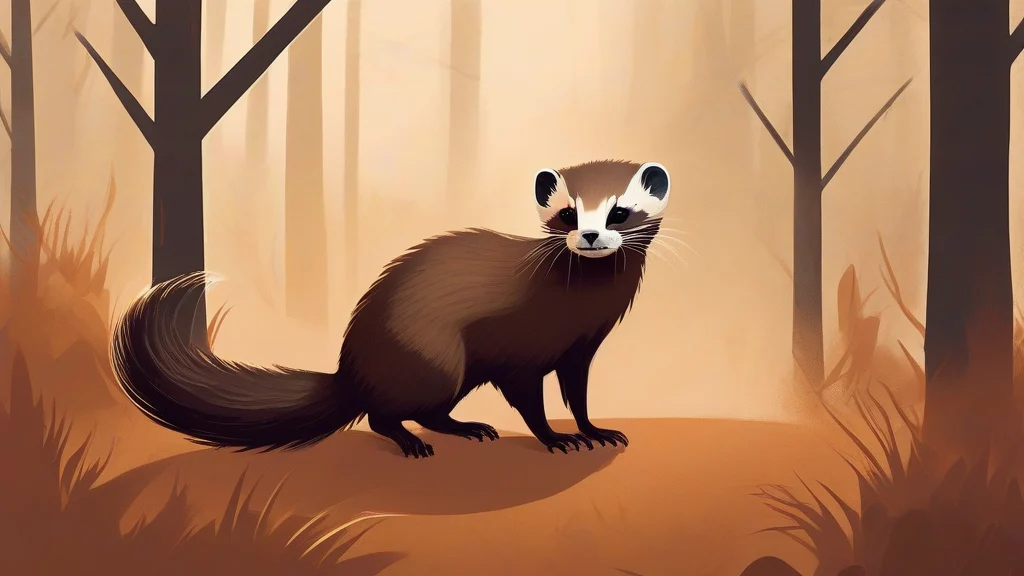
What does foumart mean?
A foumart is an old English name for the European polecat, a small, fierce carnivore of the weasel family native to Britain and continental Europe. The name is a compound of 'foul' and 'mart', reflecting both the animal's notorious musky odour — used defensively and to mark territory — and an older term for cat-like mustelids. Polecats are nocturnal hunters of rabbits, rats, and other small prey, and were once widely persecuted by gamekeepers for raiding poultry coops, which cemented their unsavoury reputation. In modern standard English the word has fallen almost entirely out of use, replaced by 'polecat', though it lingers in rural dialect, folklore, and older natural-history texts, where it offers a vivid glimpse of how country people named animals for their most memorable traits.
nounA foumart is the European polecat (Mustela putorius), a small carnivorous mammal of the weasel family, so named in folk belief because of its foul-smelling musk. The word is now chiefly historical and dialectal.
- The European polecat (Mustela putorius), a foul-smelling wild mustelid; now largely historical or regional usage.
"The gamekeeper found a foumart raiding the pheasant pen and chased it into the hedgerow."
"A foumart had been at the henhouse again, leaving its unmistakable musk behind."
"In old rural speech, any weasel-like raider of the poultry yard was likely to be called a foumart."
The plural follows regular English noun formation; given the word's rarity it is seldom encountered.
"Several foumarts were reported near the rabbit warren."
'Foumart' literally fuses 'foul' and 'mart' — medieval countryfolk named this polecat after its stench, making it one of the few English animals christened by its own bad smell.
Reviewed by Deb Chak, Editor. AI-assisted content curated by RJS Tech Solutions LLP.
Etymology of foumart
Foumart arose in late medieval England as a compound of 'foul', referring to the animal's strong musk, and 'mart', an older English term for the marten or polecat kind of animal. It appears in English texts from roughly the fifteenth century onward and was long the common country name for Mustela putorius. Its closest kin among English words are the related mustelid names 'marten' and 'martin', which share the same root notion of the 'mart' or marten-like creature.
How foumart is actually used
The word is archaic or dialectal in modern English; 'polecat' is the standard term today. It survives mainly in regional British speech and in historical or natural-history writing.
Easily confused with foumart
A marten is a related but arboreal mustelid of the genus Martes that lives in woodland and does not carry the foumart's reputation for foul odour.
The ferret is the domesticated form of the same species as the foumart (the polecat), bred for hunting rabbits rather than living wild.