What does foxhole mean?
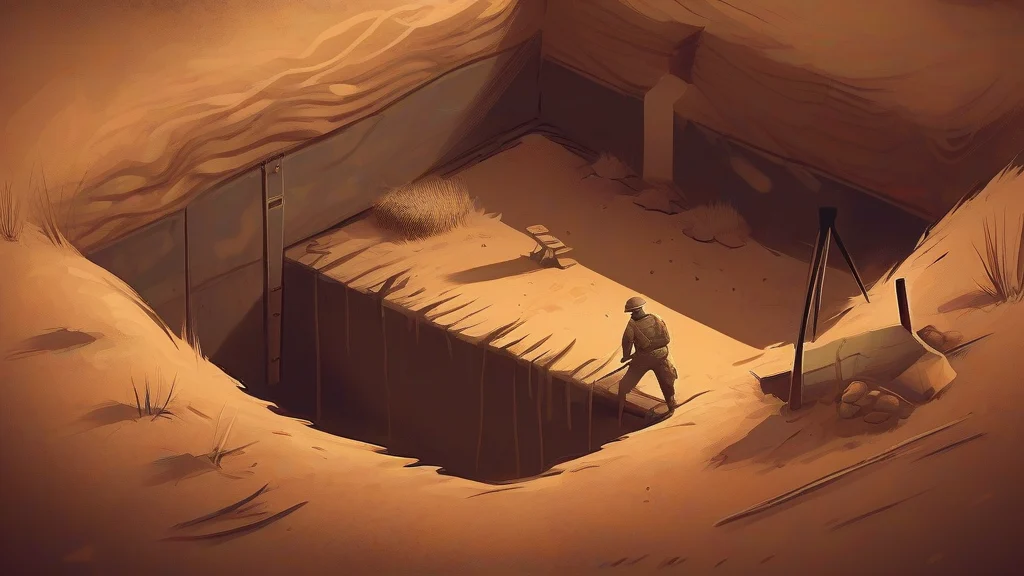
A foxhole is a small pit dug into the ground by a soldier to serve as an individual defensive position, offering protection from enemy fire and, to a lesser degree, from shrapnel and the elements. Typically large enough for one or two people, a foxhole can be excavated quickly with basic entrenching tools, making it a staple of fieldcraft since the era of trench warfare. The word carries strong connotations of vulnerability, endurance, and front-line experience, appearing constantly in war memoirs, journalism, and cinema. It also has a figurative life: commentators speak of public figures retreating into a 'political foxhole' when they withdraw from view amid controversy. The term even entered popular moral discourse through the saying 'there are no atheists in foxholes,' reflecting how moments of mortal danger have been popularly assumed to provoke prayer. Practical, vivid, and culturally resonant, foxhole remains a useful word for describing both literal battlefield shelter and metaphorical retreat.
nounA small pit dug in the ground by a soldier to provide shelter and protection from enemy fire.
- A small pit dug by a soldier as a defensive shelter from enemy fire.
- Figuratively, any place of refuge or concealment used to escape danger or scrutiny.
"The soldiers dug foxholes along the ridge before nightfall."
"The infantry dug foxholes along the ridge before darkness fell."
"After the scandal broke, the senator went into a political foxhole and refused all interviews."
Standard regular plural; commonly used when describing a defensive line or network of positions.
"Foxholes dotted the hillside where the company had dug in for the night."
"There are no atheists in foxholes" — this famous saying made the humble fighting pit one of the most quoted words in American military culture.
Reviewed by Deb Chak, Editor. AI-assisted content curated by RJS Tech Solutions LLP.
Etymology of foxhole
Foxhole is an English compound of 'fox', the animal name inherited from Germanic roots, and 'hole', referring to the burrows foxes dig for shelter. The word was adopted by soldiers because the pits they excavated resembled an animal's earth, and it became widespread during the First World War before entering general English vocabulary. Its Germanic components give it shared ancestry with other everyday words built on the animal name, such as foxhound and foxtrot.
How foxhole is actually used
Primarily a military term, widely familiar to civilians through war reporting, memoirs, and films. The figurative use — hiding from trouble or publicity — is common in journalism and political commentary, though slightly informal. In British usage, the term overlaps with 'slit trench', which served a similar purpose in both World Wars.
Easily confused with foxhole
A trench is a long, often connected channel dug for defense, while a foxhole is a small pit large enough for only one or two soldiers.
Foxglove is a flowering plant whose name merely resembles 'foxhole' in spelling; it has nothing to do with military shelters.