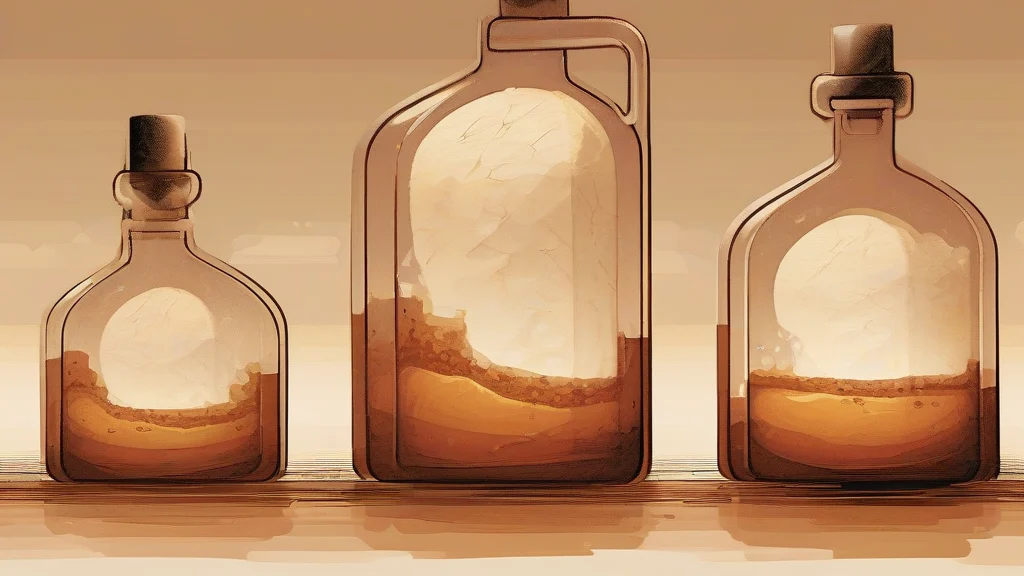
What does fractionation mean?
Fractionation is the process of separating a whole — typically a mixture — into distinct parts or fractions based on differences in a physical property such as boiling point, size, density, or solubility. Its most familiar industrial application is the fractional distillation of crude oil, in which heated petroleum rises through tall distillation columns and condenses at different levels, yielding gasoline, kerosene, diesel, and heavier residues. In biology, fractionation underpins techniques like plasma fractionation, which divides donated blood plasma into therapeutic proteins, and cell fractionation, which breaks cells apart to isolate organelles for study. In the earth sciences, isotope fractionation describes how physical and chemical processes subtly alter the ratios of isotopes, allowing scientists to reconstruct past climates from ice cores and marine sediments. Derived from 'fraction', itself rooted in the Latin frangere, meaning to break, the word literally embodies its meaning: breaking a whole into pieces with purpose and precision. It remains a cornerstone term across modern science and industry.
nounThe process of separating a whole into fractions or components, especially the separation of a mixture into its constituents, as in the fractional distillation of petroleum or the fractionation of blood plasma.
- In chemistry and industry: the separation of a liquid mixture into fractions differing in boiling point, as in fractional distillation.
- In biology and biochemistry: the separation of cells or cell components into parts, as in cell or plasma fractionation.
- In geoscience: the process by which the isotopic or chemical composition of a material changes during physical or chemical processes, as in isotope fractionation.
"Crude oil is refined by fractionation, which separates it into gasoline, kerosene, and other useful products."
"Air fractionation at low temperatures yields pure nitrogen and oxygen for industrial use."
"Isotope fractionation in ice cores lets scientists reconstruct temperatures from hundreds of thousands of years ago."
Rare and largely confined to scientific literature, where it refers to multiple instances or repetitions of the separation procedure rather than a countable object.
"Successive fractionations of the extract yielded progressively purer compounds."
Every drop of gasoline you have ever used exists because of fractionation — towering distillation columns that split crude oil into its layered components, much like separating cream from milk.
Reviewed by Deb Chak, Editor. AI-assisted content curated by RJS Tech Solutions LLP.
Etymology of fractionation
Fractionation derives from 'fractionate' and ultimately from 'fraction', which comes from the Latin fractio ('a breaking'), itself from frangere ('to break') — the same root that gives us fracture, fragile, and fragment. The concept emerged in the nineteenth century alongside industrial fractional distillation, as chemists developed systematic methods for separating mixtures into constituent parts. Its cognates all trace back to this Latin root concerned with breaking things apart, making fractionation a fitting descendant of a word family defined by division.
How fractionation is actually used
Fractionation is a technical, formal term used almost exclusively in scientific and engineering contexts — chemistry, chemical engineering, biology, medicine, and earth sciences. It is uncountable in general use but can take a plural form when referring to multiple instances or procedures. It carries no emotional connotation; it is purely descriptive.
Easily confused with fractionation
A fraction is one of the parts themselves (a numerical portion), whereas fractionation is the process of separating a whole into such parts.