What does distillation mean?
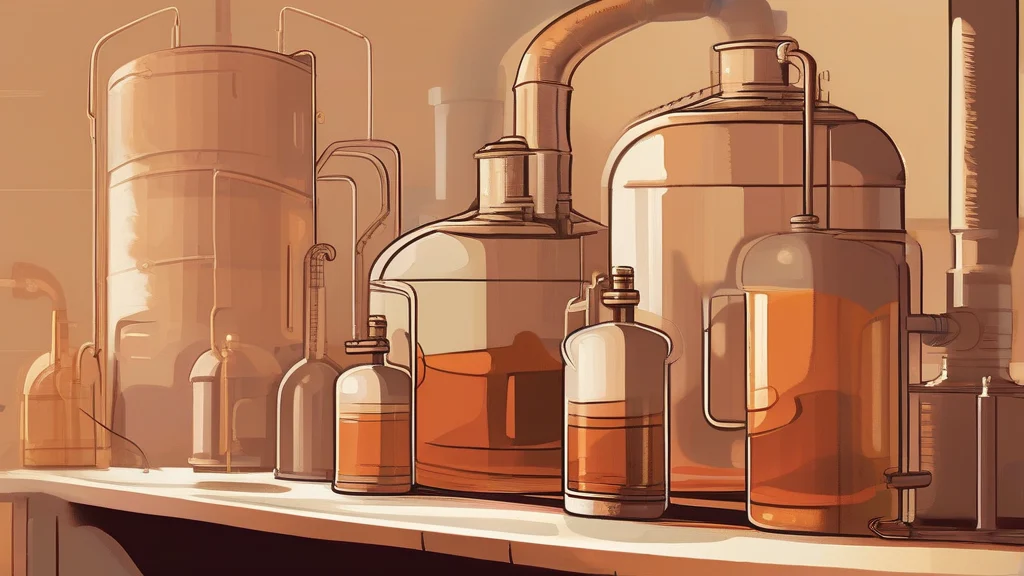
Distillation is the process of heating a liquid until it vaporizes, then cooling that vapor so it condenses back into liquid form — typically to separate a desired component from impurities or from other substances with different boiling points. It is fundamental to chemistry and industry, used to produce spirits like whiskey and vodka, to refine petroleum into gasoline, and to desalinate seawater. Beyond its literal scientific sense, distillation is widely used figuratively to mean extracting the essential core of something larger: a speech might be called a distillation of years of research, or a short poem a distillation of grief. This figurative use carries positive connotations of clarity, concentration, and refinement. The word derives from the Latin destillare, meaning "to drip down," reflecting the way purified liquid condenses drop by drop during the process. Both its practical and metaphorical senses remain common in contemporary English.
nounThe process of purifying a liquid by heating it to vapor, then cooling and condensing the vapor to collect it. More broadly, the act of extracting the essential meaning or gist of something.
- The physical process of separating or purifying liquids through evaporation and condensation.
- A concentrated essence or summary extracted from something larger or more diffuse.
"The whiskey's character is shaped by a careful process of double distillation."
"Sea water can be made drinkable through desalination by distillation."
"Her memoir was praised as the distilled essence — no, the very distillation — of a life spent in public service."
Rarely pluralized except when referring to multiple distinct instances of the process, or figuratively to multiple extracts/essences.
"The chemist recorded the temperatures at which each of the successive distillations occurred."
Every drop of your favorite whiskey has passed through fire — literally — because without distillation, alcohol could never exceed the strength of wine or beer.
Reviewed by Deb Chak, Editor. AI-assisted content curated by RJS Tech Solutions LLP.
Etymology of distillation
Distillation derives from the Latin verb destillare, formed from de- ("down") plus stillare ("to drip"), itself related to stilla ("a drop"). The term entered English via Old French distillation in the late medieval period, with early attestations appearing around the 15th century as alchemical practice became more formalized. Cognates include the English words distill (or British distil), distillery, and instill, all sharing the same Latin root concerning droplets and dripping.
Related word forms
How distillation is actually used
"Distillation" carries both technical/scientific register (chemistry, industry) and figurative/literary register (a "distillation of ideas"). The figurative use implies refinement and essence rather than mere abbreviation. Spelling variants: "distillation" is standard in both British and US English; the verb differs (British "distil", US "distill") but the noun form is identical in both.
Easily confused with distillation
Condensation is only the cooling of vapor back into liquid, while distillation encompasses the full cycle of heating, vaporizing, and condensing for purification.