
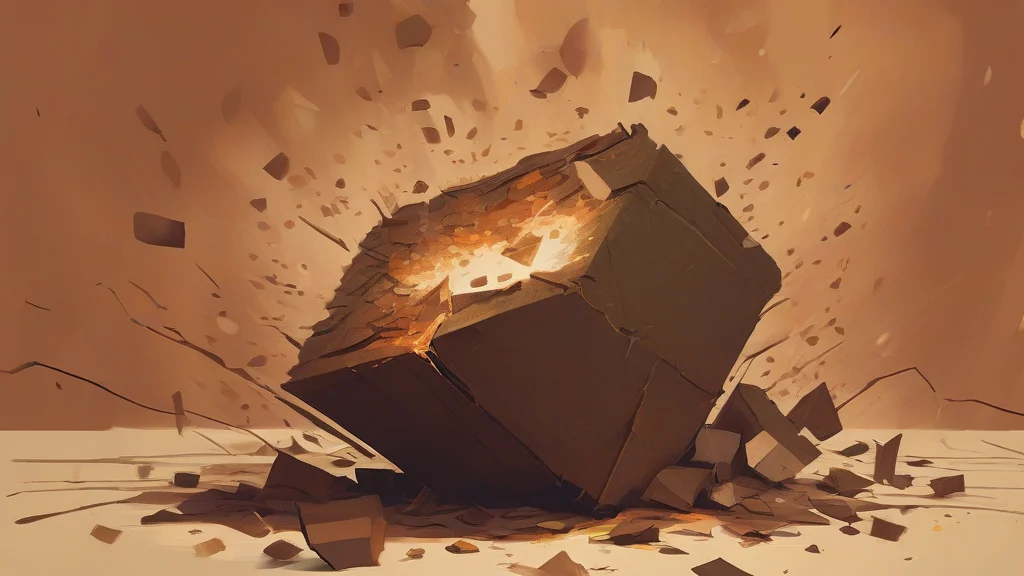
What does frangible mean?
Frangible describes something that breaks readily — an object so brittle or delicately constructed that ordinary handling or modest force is enough to fracture it. The term belongs chiefly to formal and technical language: engineers assess the frangibility of ceramics and composites, conservators treat ancient plaster as frangible, and ballisticians design frangible ammunition that disintegrates on impact to reduce ricochet risk and collateral damage. In this deliberate-breaking sense, frangibility can even be a designed virtue rather than a flaw. Though closely related to 'fragile', the word carries a more precise, mechanical flavor: fragile suggests vulnerability to mishandling, while frangible emphasizes the tendency to split or crumble into fragments. Derived from Latin roots concerned with breaking, frangible offers writers a crisp, authoritative alternative whenever the manner of breaking — not mere delicacy — is what matters.
adjectiveEasily broken; fragile or brittle enough to be broken into fragments, often with little force.
- Capable of being broken easily; brittle or fragile in structure.
- (In technical contexts) designed to break apart deliberately upon impact or stress.
"The museum stored the frangible glass ornaments in padded crates for shipping."
"The old plaster ceiling tiles were so frangible that even a gentle tap sent flakes drifting down."
"Marksmen at indoor ranges use frangible ammunition because it disintegrates against hard backstops instead of ricocheting."
Frangible bullets are designed to crumble on impact rather than pass through a target — a word born of breaking, used to save lives.
Reviewed by Deb Chak, Editor. AI-assisted content curated by RJS Tech Solutions LLP.
Etymology of frangible
Frangible derives from the Latin verb 'frangere', meaning to break, via its neuter participle stem 'frangibilis'. The word entered English in the early seventeenth century, borrowed directly from Latin learned usage rather than through French intermediaries. It shares this root with cognates such as 'fragment', 'fraction', 'fracture', and the rarer opposite 'infrangible', which denotes something that cannot be broken.
Related word forms
How frangible is actually used
Frangible is a formal or technical register adjective; in everyday conversation most speakers reach for 'fragile' instead. It carries no particular emotional connotation beyond its literal meaning, and it appears most often in scientific, military, and materials-engineering writing.
Easily confused with frangible
Fragile refers to objects that break easily when handled roughly, while frangible emphasizes a tendency to shatter or break into fragments under relatively slight force — frangible is the more technical term, common in engineering and ballistics.