
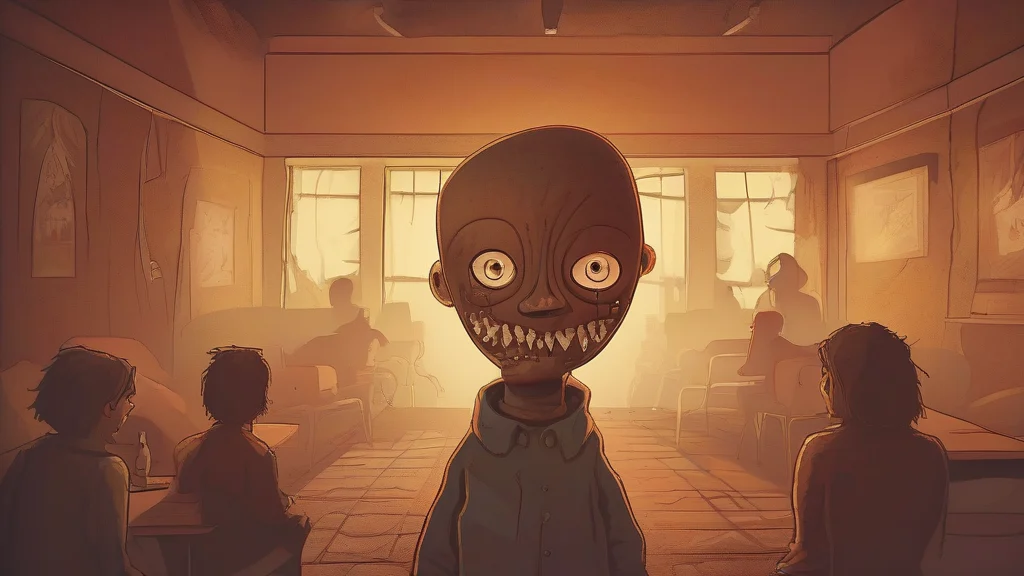
What does freakiest mean?
"Freakiest" is the superlative form of "freaky", an informal English adjective used to describe whatever is the strangest, weirdest, or most unsettling among a set of things. It appears wherever everyday language brushes against the bizarre: describing eerie experiences, unusual weather, uncanny coincidences, or eccentric behaviour. The word carries strong connotations of unease mixed with fascination — the freakiest thing is not merely odd, but memorably, almost thrillingly so. In contemporary slang, particularly in music and popular culture, "freaky" and by extension "freakiest" can also take on a playful connotation of unconventionality or uninhibited adventurousness, giving the word a second life beyond horror and strangeness. Because it is inherently informal, it suits conversation, reviews, storytelling, and social media rather than formal prose, where words like "most extraordinary" or "most aberrant" would be preferred. Its roots lie in "freak", a word that once referred to sideshow curiosities and gradually broadened into general slang for anything wildly out of the ordinary.
adjectiveThe superlative form of 'freaky'; strangest, weirdest, or most unusual or unsettling in appearance, behaviour, or character.
- As the superlative of 'freaky': most strange, weird, or unsettling.
- In informal or sexual contexts: most unconventional, wild, or uninhibited in behaviour.
"It was the freakiest weather the town had seen in decades."
"That abandoned funfair was easily the freakiest place any of us had ever been."
"He told the wildest, freakiest stories at parties, and everyone leaned in to listen."
From circus sideshows to slang: 'freak' began as a 19th-century term for exhibition oddities and mutated into one of pop culture's favourite words for the weird.
Reviewed by Deb Chak, Editor. AI-assisted content curated by RJS Tech Solutions LLP.
Etymology of freakiest
"Freakiest" derives from "freaky", which in turn comes from "freak", a word that appeared in English in the early-to-mid 19th century originally meaning a sudden whim or change of mind, and soon after came to denote physical abnormalities, especially those exhibited in circus and fairground sideshows. The adjective "freaky" developed in the 20th century, first meaning odd or abnormal and later acquiring slang senses tied to unconventional behaviour. The word's journey from Victorian exhibition culture to modern informal vocabulary gives it an unusually colourful lineage for such a casually used adjective.
Related word forms
How freakiest is actually used
Informal register throughout; common in casual conversation, pop culture, music, and social media rather than formal writing. In some contexts (especially modern slang), 'freaky' and its superlative carry a playful sexual connotation about adventurousness, so context matters when using it.
Easily confused with freakiest
'Freakish' describes something bizarre or abnormal as a fixed quality, while 'freakiest' is the superlative of the more informal adjective 'freaky', emphasizing how strange or unsettling something is.