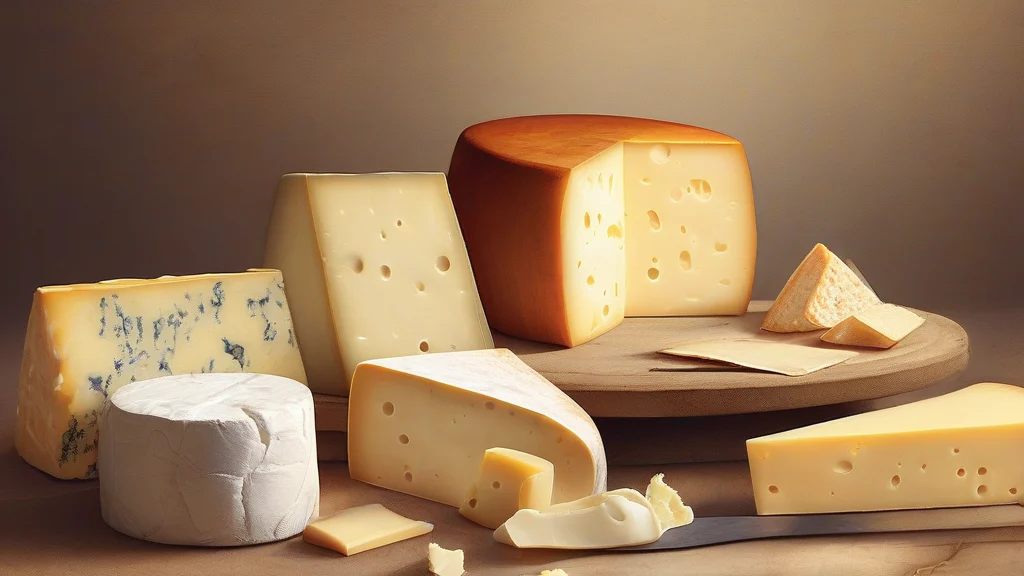
What does fromage mean?
Fromage is the French word for cheese, adopted into English primarily through cooking, dining, and food writing. In everyday English speech the native word 'cheese' dominates, so 'fromage' tends to appear where a French flavor is intended: on menus describing a cheese course, in recipes, and in the names of particular products such as fromage blanc and fromage frais, both of which are fresh, mild, unaged soft cheeses popular in French cuisine and widely sold in British supermarkets. The word lends any sentence a touch of Gallic sophistication, which explains its appeal to restaurateurs and food writers, though used carelessly outside a culinary register it can seem pretentious. Historically, fromage derives from the Latin caseus formatus, meaning cheese pressed into a mold, via the Late Latin formaticum; this makes it an etymological cousin of English words built on the Latin root forma, such as format and formula. For anyone interested in food culture, it is a small but telling example of how language travels with cuisine.
nounThe French word for cheese, used in English chiefly in culinary contexts and in names of specific cheese-based dishes or products such as fromage blanc.
- Cheese, especially as referred to using the French term in English-language menus and food writing.
- A specific cheese-based product named with the term, such as fromage blanc or fromage frais (fresh, unaged soft cheeses).
"The cheese course featured a ripe Brie alongside a delicate goat's fromage from the Loire Valley."
"For dessert we ordered a plateau de fromage with quince paste and walnuts."
"Stir a spoonful of honey into chilled fromage blanc for a simple French-style breakfast."
In English usage the plural typically follows normal pluralization rules ('fromages'); in careful French-influenced writing, singular 'fromage' may be kept per item on a menu.
"The tasting board offered five different fromages from across Normandy."
'Fromage' literally preserves the shape of its own history — it descends from Latin caseus formatus, 'molded cheese,' because the shape of the mold was the whole point.
Reviewed by Deb Chak, Editor. AI-assisted content curated by RJS Tech Solutions LLP.
Etymology of fromage
The word comes from Old French 'formage', itself derived from Late Latin 'formaticum' (caseus formatus), meaning cheese shaped or pressed in a mold, ultimately rooted in the Latin noun 'forma' ('shape', 'mold'). This makes fromage an unexpected relative of English words drawn from the same Latin root, including format, formation, and formal, all of which concern shape or structure. The spelling shifted from 'formage' to 'fromage' in French during the medieval period, and the modern French term was later borrowed into English largely intact, retaining its distinctive final -age ending.
How fromage is actually used
In English, 'fromage' carries a distinctly Gallic, somewhat upscale connotation thanks to its use on restaurant menus and in food writing; it is a loanword rather than a fully naturalized English word, so it can read as affected if overused outside culinary contexts. The related terms fromage blanc and fromage frais are genuinely established in English cookery and refer to fresh, unaged soft cheeses rather than matured ones.
Easily confused with fromage
Frontage refers to the land or facade fronting a street or waterway, while fromage is the French term for cheese; they share only a superficial visual resemblance.