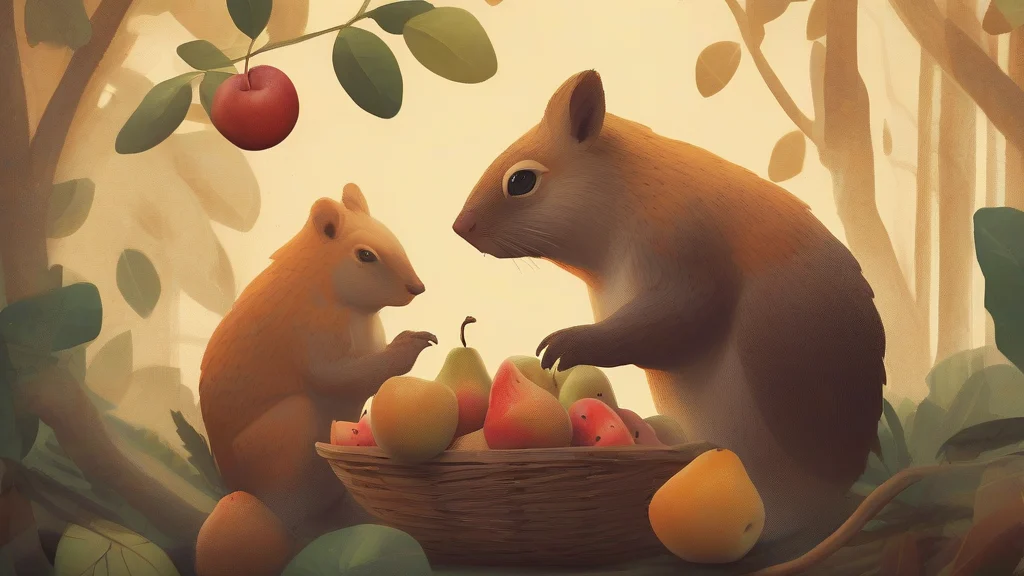
What does frugivorous mean?
Frugivorous is an adjective describing animals that feed primarily or exclusively on fruit. The term is standard in zoology and ecology, applied to species such as fruit bats, many primates, toucans, and certain pigeons and parrots whose diets centre on ripe fruit. Because fruit-eating animals often swallow seeds and disperse them far from the parent plant, frugivorous species are ecologically significant as seed dispersers, making the word common in conservation and rainforest research literature. It derives from Latin roots: frux or frug-, meaning fruit or produce, combined with the suffix -vorous, from vorare, to devour, which it shares with carnivorous and herbivorous. Related forms include the noun frugivore, denoting a fruit-eating animal, and frugivory, the practice itself. Frugivorous is a neutral, technical word with little presence in casual speech, but it offers writers a precise, evocative way to describe one of nature's most mutually beneficial dietary specialisations.
adjectiveFeeding primarily or exclusively on fruit. Used chiefly in zoology and ecology to describe animals whose diet consists largely of fruit.
- (of an animal) Feeding chiefly or entirely on fruit; fruit-eating.
"Fruit bats are among the most important frugivorous animals in tropical forests, dispersing seeds over vast distances."
"Orangutans are largely frugivorous, with ripe fruit making up the majority of their diet."
"The island's frugivorous pigeons play a vital role in germinating the forest's largest-seeded trees."
Every fig tree in a tropical forest may owe its survival to frugivorous bats that carry its seeds miles through the night sky.
Reviewed by Deb Chak, Editor. AI-assisted content curated by RJS Tech Solutions LLP.
Etymology of frugivorous
Frugivorous originates in Latin, combining frux (genitive frug-), meaning fruit or the produce of the earth, with the suffix -vorous, derived from vorare, 'to devour'. This same suffix underlies carnivorous and herbivorous, making frugivorous part of a coherent family of diet-describing terms adopted into scientific Latin and then modern English. The word entered English usage through natural-history writing, becoming established as zoologists formalised dietary classification of animals.
Related word forms
How frugivorous is actually used
A technical term of zoology and ecology, frugivorous appears mostly in scientific writing, nature journalism, and academic contexts rather than everyday conversation. It carries no emotional connotation and is used descriptively and neutrally.
Easily confused with frugivorous
Frugivore is a noun denoting a fruit-eating animal, while frugivorous is the adjective describing such an animal.