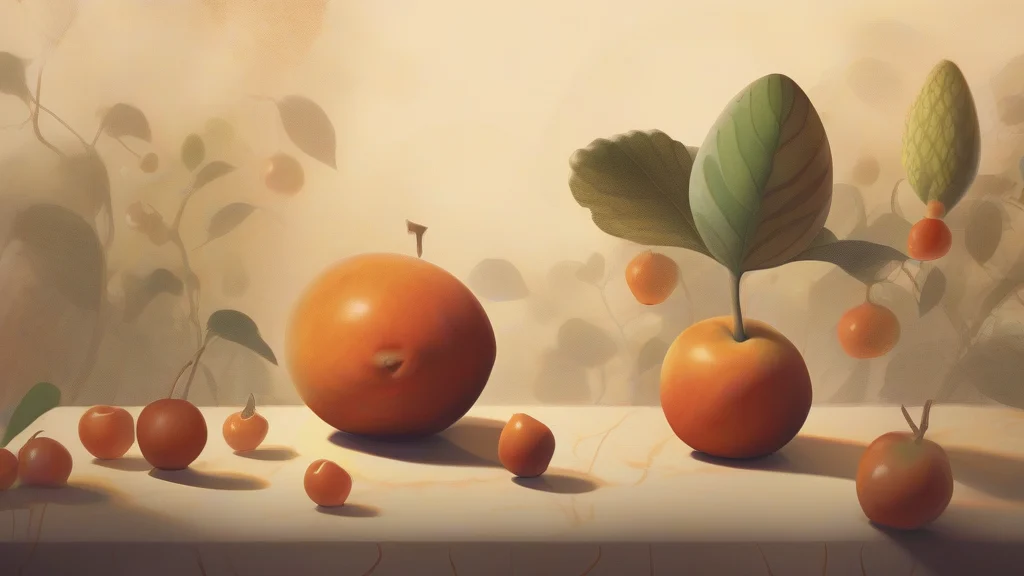
What does fruiting mean?
"Fruiting" refers to the act or process of bearing fruit — most literally, when a plant, tree, or vine produces its crop, but also, crucially, in mycology, where fungi develop specialized structures known as fruiting bodies, the familiar mushrooms and toadstools we see above ground. Gardeners speak of plants fruiting early, fruiting heavily, or failing to fruit at all, making the word central to horticultural vocabulary. Beyond biology, the term can be used figuratively: efforts that begin "fruiting" are starting to yield tangible results, echoing the older idiom of work bearing fruit. Derived from the Latin root fructus through Old French and Middle English, the word connects to a broader family including fruitful, fructify, and fructose. Its connotations are almost entirely positive — abundance, productivity, and reward — which explains its appeal well beyond scientific writing, appearing in gardening guides, cookbooks, and motivational prose alike.
(of a plant, tree, or fungus) to produce fruit or fruiting bodies; to enter the reproductive phase that yields fruit.
"After three years of growth, the fig trees finally started fruiting."
Used chiefly in horticultural, botanical, and mycological writing.
The period or state during which a plant or fungus bears fruit; in mycology, specifically the formation of fruiting bodies.
"The mushroom's fruiting was triggered by the autumn rains."
Describing a plant that is currently bearing fruit, or a structure associated with fruit production (e.g., "fruiting branch").
"She pruned the fruiting branches to improve next year's yield."
In mycology, mushrooms are technically the "fruiting bodies" of vast underground fungal networks — picking one is like picking an apple off a tree whose trunk is hidden beneath the soil.
Reviewed by Deb Chak, Editor. AI-assisted content curated by RJS Tech Solutions LLP.
Etymology of fruiting
"Fruiting" derives from "fruit," which traces back through Old French "fruit" to the Latin "fructus," meaning produce or enjoyment, ultimately from the Latin verb "frui" (to enjoy). The verb sense of fruiting developed in English usage as horticulture and botany matured as sciences, describing the reproductive stage of plants. The same Latin root gave English related words such as "fructify" (to bear fruit), "fructose" (fruit sugar), and "fruition" (the realization of a goal), all sharing the notion of ripeness and fulfillment.
Related word forms
How fruiting is actually used
Most commonly encountered in horticultural, agricultural, and mycological contexts, where it carries precise technical meaning. The figurative use overlaps with "bearing fruit" and is somewhat less common. In botany and mycology, "fruiting body" refers to the spore-producing structure of fungi.
Easily confused with fruiting
"Fruiting" describes the ongoing act of producing fruit, while "fruitful" describes something productive or yielding good results more generally.