What does furcated mean?
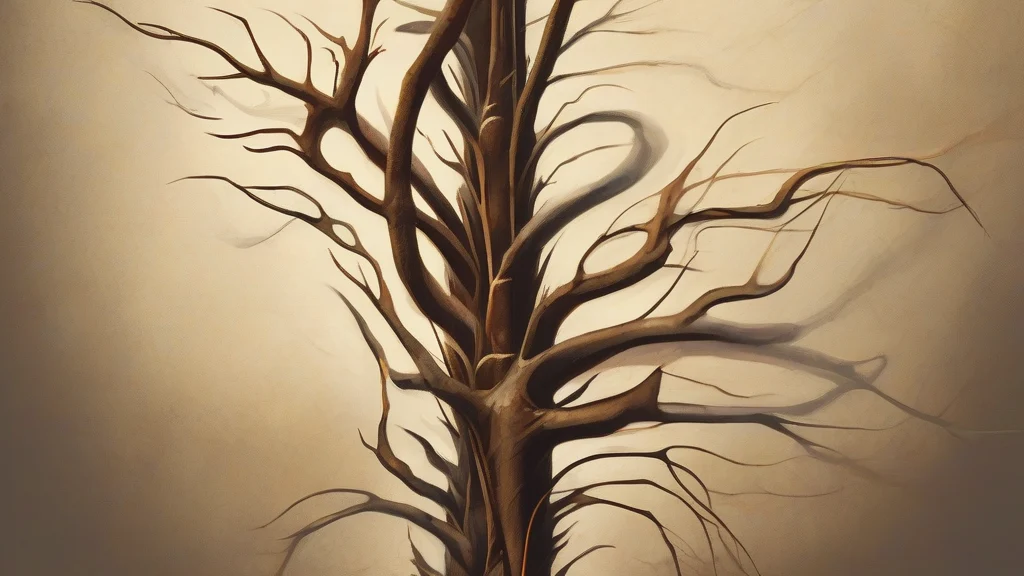
Furcated describes something that has branched or divided into fork-like parts, much as a fork tines split from a single handle. The word is most at home in scientific writing, where zoologists and botanists apply it to tails, antennae, roots, feathers, and other structures that divide outward from a common point. A bird such as a swallow is famously recognized by its deeply furcated tail, which improves maneuverability in the air. Though it can describe divisions into more than two branches, English speakers more often reach for 'bifurcated' when exactly two are meant, and simply 'forked' in everyday speech. Derived from the Latin 'furca', meaning a fork-shaped implement or prop, the word carries an air of formal precision rather than warmth or emotion. For readers of natural history, anatomy, or descriptive prose, recognizing 'furcated' signals that a writer is describing shape and structure with deliberate, almost anatomical exactness — a small word that lends scientific polish to any description of branching form.
Divided or branching into fork-like parts.
"The male wood duck's long furcated feathers trail behind it during courtship flights."
Used mainly in biological and anatomical description; 'forked' is preferred in general contexts.
Having split or divided into branches, like a fork.
"Where the river furcated around the island, each channel carried half the flow."
As a verb, 'furcate' is rare outside technical writing; its past-participle use appears mostly in descriptive prose.
From the Latin 'furca' — the humble farm fork — this word turns up wherever nature builds a Y: swallow tails, snake tongues, and even the furcula, the fused collarbone birds use to power flight.
Reviewed by Deb Chak, Editor. AI-assisted content curated by RJS Tech Solutions LLP.
Etymology of furcated
'Furcated' derives ultimately from the Latin noun 'furca', meaning a fork — both the farming implement and the yoke-shaped prop used to support vines. Latin also gave us the adjective 'furcatus', meaning forked, which underlies the English verb 'furcate' and its participle 'furcated'. The same root produced 'furcula' (literally 'little fork'), used in anatomy for the fused collarbones of birds and in entomology for the springing appendage of springtails. Related English words sharing this heritage include 'bifurcate' and 'furcation'.
Related word forms
How furcated is actually used
Predominantly a formal or technical term, encountered chiefly in zoology, botany, and anatomy rather than everyday conversation. In general prose, writers usually prefer 'forked' or 'bifurcated'. It carries no strong connotation beyond descriptive precision.
Easily confused with furcated
'Furcated' means forked or branched, while the superficially similar-looking 'fornicated' relates to fornication, i.e., illicit sexual intercourse.
'Bifurcated' refers specifically to a division into exactly two branches, whereas 'furcated' can describe a fork-like division generally, including multiple branches.