
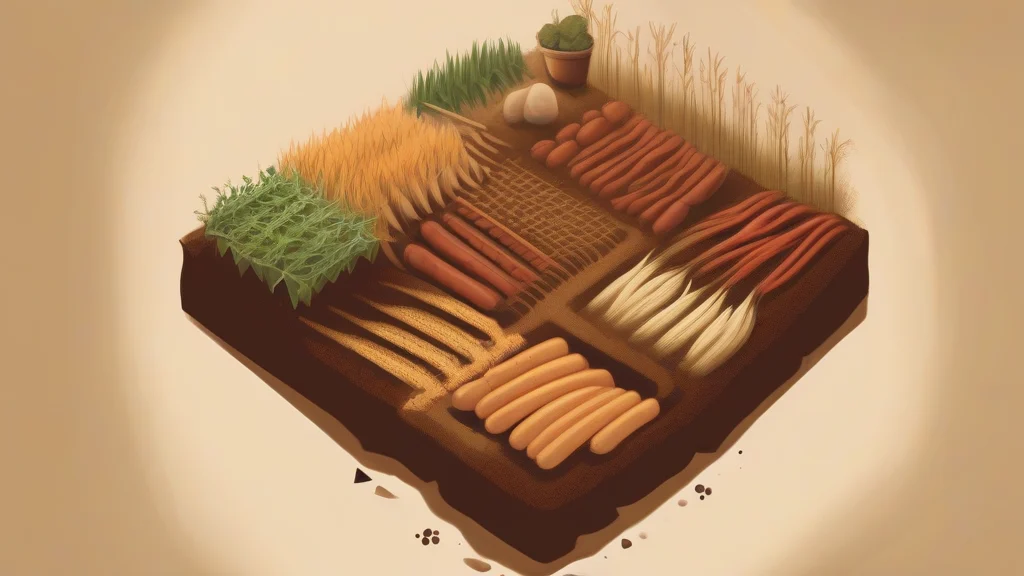
What does furrower mean?
A furrower is an implement designed to cut long, narrow trenches — called furrows — into cultivated soil. Gardeners use small hand-held furrowers to open neat drills for sowing vegetable seed, while farmers attach larger furrower implements to tractors or plows to form planting ridges, hill crops such as potatoes, or cut channels for irrigating row crops. The word belongs squarely to the vocabulary of agriculture and horticulture, appearing in equipment catalogs, farming manuals, and gardening guides far more often than in everyday speech. Its connotations are purely practical and utilitarian; it names a means to an orderly, productive plot. The term derives from 'furrow', the ancient English word for the trench a plow leaves behind, and understanding a furrower means understanding one of the oldest ideas in cultivation: shaping the earth into rows so that seed, water, and sunlight can be managed with precision.
nounA furrower is a tool or implement used to cut or form furrows — long, narrow trenches — in soil, typically for planting seeds, setting out rows of crops such as potatoes, or channeling irrigation water. It may be a hand-held garden tool or an attachment fitted to a plow, tractor, or cultivator.
- An agricultural or gardening implement that cuts or forms furrows in soil for planting or irrigation.
- (Broader/rarer) A person or thing that makes furrows.
"The farmer fitted a furrower to his tractor and opened neat rows across the field before planting the potato seed."
"Before sowing the carrot seed, she ran the furrower along the bed to open evenly spaced drills."
"With a furrower attachment on the tractor, he carved irrigation channels between each row of vegetables."
As a countable noun denoting implements, the plural simply follows the standard '-s' pattern.
"The equipment shed held several furrowers of different widths."
Behind every tidy row of potatoes in a garden lies one humble, unglamorous tool doing the trench work: the furrower.
Reviewed by Deb Chak, Editor. AI-assisted content curated by RJS Tech Solutions LLP.
Where does furrower come from?
The word furrower derives from 'furrow', which traces back to Old English 'furh', meaning a trench or groove cut in the ground by a plow, with cognate forms in other Germanic languages such as German 'Furche'. As agricultural machinery diversified in the modern era, the agentive suffix '-er' was added to name the implement that makes furrows, following the common English pattern of forming trade and tool names. The underlying concept — the plowed trench — is among the oldest terms in the English farming lexicon.
Related word forms
How furrower is actually used
Furrower is a practical, workmanlike term used almost entirely within farming and gardening contexts; it carries no emotional connotation and appears rarely in general conversation or literature. It most often denotes an implement rather than a person, though the agentive sense ('one who furrows') exists in principle.
Easily confused with furrower
A furrow is the trench or groove itself in the soil, whereas a furrower is the tool or implement used to create that trench.