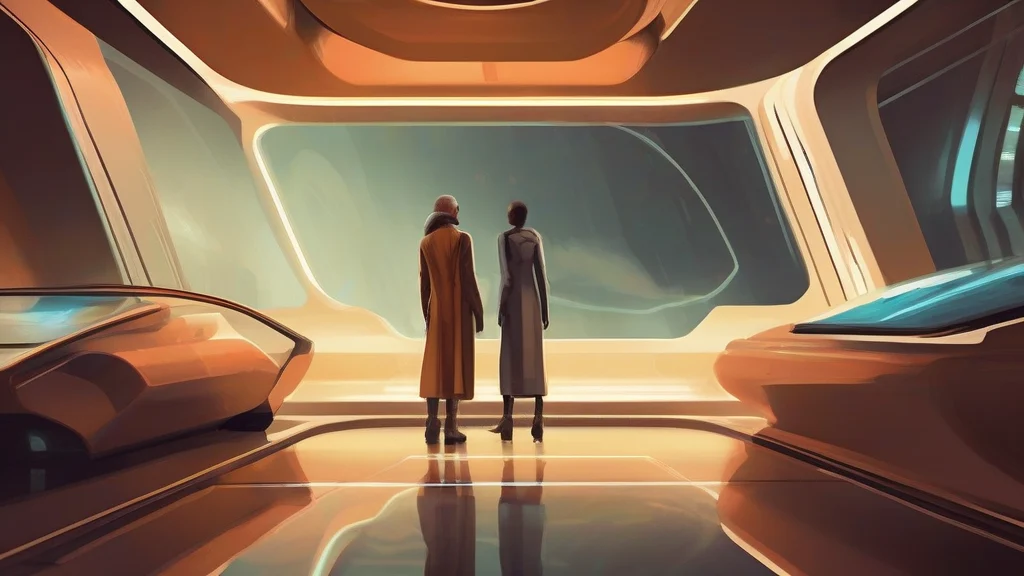
What does futuristic mean?
"Futuristic" is an adjective describing things that look, feel, or seem characteristic of the future rather than the present or past — most often applied to design, architecture, fashion, and technology that appear strikingly modern or ahead of their time. A building with sweeping curves and glowing panels might be called futuristic, as might a concept car, a film's visual style, or an imagined society in science fiction. The word carries strongly positive connotations of innovation, progress, and imagination, though it can also suggest something cold or impersonal when applied to stark, machine-like environments. Derived from the Latin root "futurus," meaning "about to be," it entered English alongside related terms such as "futurism," the early twentieth-century artistic movement celebrating speed and modernity. Its flexibility across contexts — from product marketing to speculative fiction — makes it one of the most versatile words for describing our evolving relationship with tomorrow.
adjectiveHaving or suggesting the appearance, style, or character of the future; strikingly modern, advanced, or ahead of its time in design or technology.
- Describing design, architecture, fashion, or technology that is strikingly modern or suggestive of what the future will look like.
- Characterizing ideas, fiction, or visions concerned with how the future might be (e.g. futuristic sci-fi settings).
"The museum's futuristic glass atrium seemed to belong to another century."
"The car's sleek, futuristic silhouette turned heads at every intersection."
"Her novel imagines a futuristic city where AI governs daily life."
The word borrows the Latin 'futurus' — meaning literally 'about to be' — so every time you call a gadget futuristic, you're speaking an ancient prophecy about tomorrow.
Reviewed by Deb Chak, Editor. AI-assisted content curated by RJS Tech Solutions LLP.
Etymology of futuristic
The adjective "futuristic" traces back to the Latin noun "futura" and its adjective form "futurus," meaning "about to be" or "yet to come," from which English derives both "future" and "futurity." The word gained prominence through association with Futurism, the Italian avant-garde movement founded by Filippo Tommaso Marinetti around 1909, which glorified speed, machinery, and technological progress — and whose adherents were called futurists. From this context, "futuristic" came to denote anything styled after imagined futures, a use that flourished with mid-twentieth-century space-age design and remains common today.
Related word forms
How futuristic is actually used
Almost always positive or admiring in connotation, evoking innovation and progress, though it can carry a cold or impersonal tone when describing sterile environments. Common in everyday speech as well as design and technology journalism.
Easily confused with futuristic
"Future" refers to time yet to come, while "futuristic" describes things that look or feel like they belong to that future.