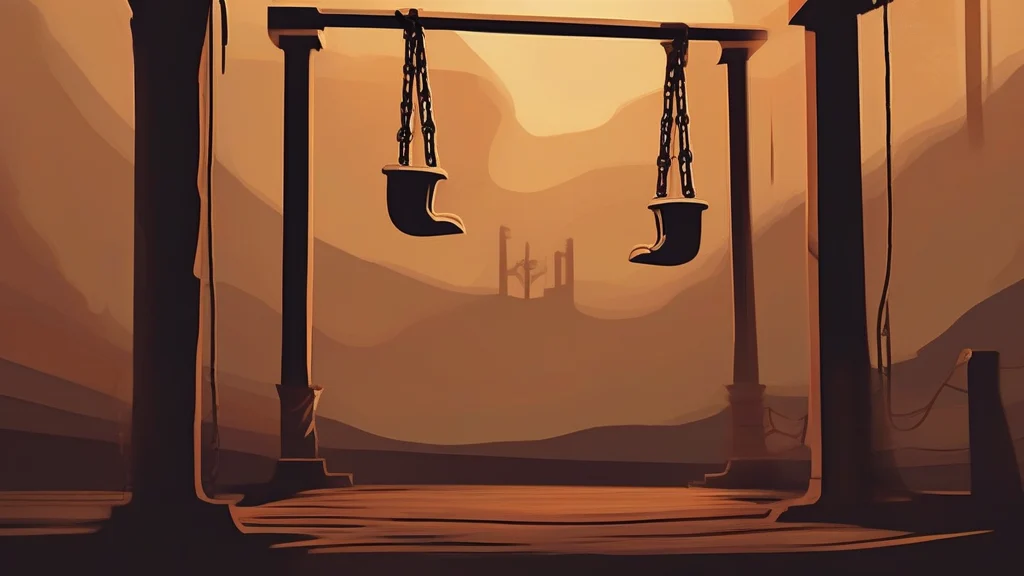
What does gallous mean?
'Gallous' is a rare, chiefly British adjective meaning of or relating to the gallows — the wooden frame on which condemned prisoners were hanged. It may describe something connected with hanging or execution directly, such as a tree once used as a scaffold, or convey the grim, sinister atmosphere that surrounds such places. Because the word has largely fallen out of everyday use, modern readers encounter it mostly in older literature, legal history, or regional writing rather than contemporary prose. Where today's writers might speak of 'gallows humour' or simply 'the gallows', earlier authors could reach for 'gallous' to evoke the shadow of the rope. The word's connotations are unavoidably dark: dread, morbidity, and the machinery of capital punishment. Though seldom used now, it remains a striking example of how English once formed adjectives directly from grim objects, preserving in its very shape the language of the scaffold.
adjectiveOf or relating to a gallows or hanging; resembling or suggestive of the gallows. A rare and chiefly historical adjective applied to things associated with execution by hanging.
- Of or relating to the gallows or death by hanging.
- Having a grim or sinister quality suggestive of execution.
"The condemned man cast a gallous glance at the scaffold being built in the square."
"The old oak on the hill had long been known as a gallous tree."
"His humour turned distinctly gallous whenever executions were mentioned."
A word so tied to the scaffold that it borrows its name outright: 'gallous' simply means gallows-flavoured.
Reviewed by Deb Chak, Editor. AI-assisted content curated by RJS Tech Solutions LLP.
Etymology of gallous
'Gallous' derives from 'gallows', itself rooted in Old English 'galga' or 'gealga', meaning a gallows or cross. The Old English word has Germanic cognates, most notably the modern German 'Galgen'. The adjective form appears in older British usage and has since fallen into near-total disuse alongside the decline of public hanging.
How gallous is actually used
'Gallous' is rare and largely obsolete, appearing mainly in older British literature and regional usage. Modern writers almost always use the compound 'gallows' instead (as in 'gallows humour'). Its tone is inevitably dark and macabre.
Easily confused with gallous
'Callous' means emotionally unfeeling or hardened, while 'gallous' relates specifically to the gallows or hanging.