What does gallus mean?
Gallus is primarily encountered today as the zoological genus name for the junglefowl, the group of pheasant-like birds of South and Southeast Asia from which the domestic chicken descends. Its most famous member is the red junglefowl, Gallus gallus — one of the rare species whose scientific name simply repeats itself. The word's roots lie in ancient Latin, where gallus meant 'cock' or 'rooster', and it survives in ornithology through terms such as gallinaceous, describing chickens, pheasants, and their relatives. Separately, in Scotland — particularly around Glasgow — 'gallus' has long served as an informal adjective for someone brash, confident, and unafraid to show off, a trait regarded there with wry approval rather than censure. Whether naming a bird genus or describing a swaggering character, gallus carries a distinctive flavour: scientific precision in one context, local colour in another.
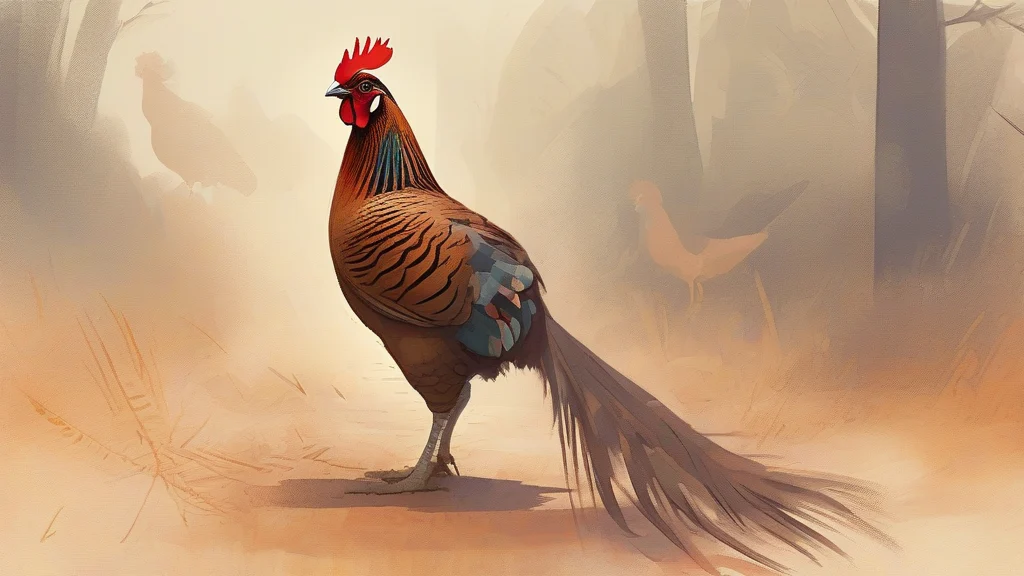
The genus Gallus, a group of junglefowl native to South and Southeast Asia that includes the wild ancestor of all domestic chickens.
"Gallus gallus, the red junglefowl, ranges from India to Indonesia and gave rise to the domestic chicken."
Used almost solely in scientific contexts; as a genus name it is conventionally capitalised.
(Scots) Bold, cheeky, or flamboyantly self-confident in manner.
"'That's a gallus wee outfit you've got on,' she said, admiring his bravado."
Informal and regionally restricted to Scotland; generally used with affectionate rather than critical intent.
In contemporary scientific writing, the genus name Gallus is treated as singular and rarely pluralised; the classical Latin plural galli applies only in historical or taxonomic contexts listing multiple species of the genus.
"The genus Gallus contains several distinct species of junglefowl."
The scientific name of every chicken on Earth carries this word: Gallus gallus, a species that literally names itself twice.
Reviewed by Deb Chak, Editor. AI-assisted content curated by RJS Tech Solutions LLP.
Etymology of gallus
Gallus comes directly from Latin, where it was the ordinary word for a cockerel or rooster; its ultimate origin within Indo-European is debated, though some scholars have connected it to words denoting vigour or battle, reflecting the fighting cock's reputation. The Latin root gave rise to ornithological terms such as gallinaceous, used for chicken-like birds. The independent Scots adjective 'gallus' emerged later, likely influenced by associations with the rooster's strutting confidence, and became firmly rooted in west-central Scottish speech.
How gallus is actually used
The zoological term appears almost exclusively in scientific and ornithological contexts, usually written with an initial capital (Gallus) as a genus name. The adjectival 'gallus' is distinctly Scottish and colloquial, conveying affectionate admiration for cheek or swagger rather than disapproval.
Easily confused with gallus
A gallows is a wooden frame used historically for executions by hanging, whereas Gallus is a genus of birds; they share only a superficial similarity in spelling.
Callous means emotionally insensitive and rhymes with gallus, but the two words are unrelated in meaning.