What does gamekeeper mean?
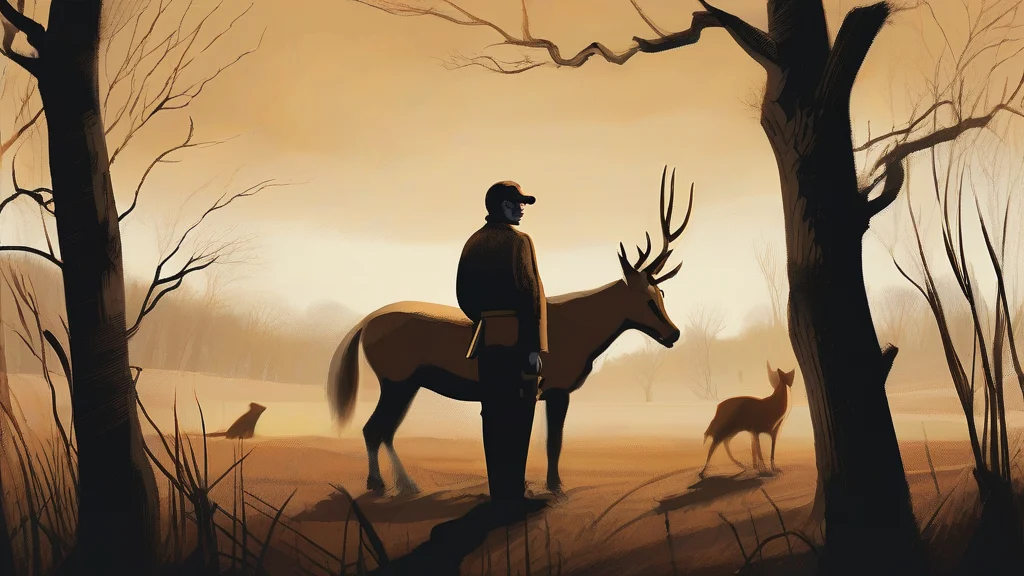
A gamekeeper is a person employed to look after wild game — typically birds such as pheasants and grouse, and mammals such as deer — on a private estate or hunting land. The role, rooted in the British countryside tradition, involves breeding and rearing game, controlling predators and pests, managing habitat, and deterring poachers. The occupation dates back centuries, when large landholders kept staff to preserve stocks of animals for hunting as a privileged pastime. Today gamekeepers still work on estates, particularly in Britain, though their duties increasingly include conservation work benefiting broader wildlife. In North America, the closest equivalent is the game warden, a public official who enforces wildlife laws rather than serving a private landowner. The word carries strong connotations of rural life, class tradition, and stewardship of the land.
nounA person employed to manage and protect game animals and birds on a private estate or hunting ground, especially by guarding them against poachers and predators.
- A person employed on a country estate to breed, protect, and manage game birds and animals, and to prevent poaching.
"The gamekeeper patrolled the estate's woods at dawn, checking the pheasant pens before the shooting season opened."
"The gamekeeper spent the spring rearing pheasant poults for the autumn shoot."
"As head gamekeeper on the Scottish estate, he knew every fox earth and rabbit warren on the land."
Standard plural formation.
"The estate employed several gamekeepers to manage its sprawling moorland."
The word 'game' in gamekeeper originally meant the animal itself — from the Old English 'gaman', meaning amusement or sport, since hunting was the sport of the aristocracy.
Reviewed by Deb Chak, Editor. AI-assisted content curated by RJS Tech Solutions LLP.
Etymology of gamekeeper
The word gamekeeper combines 'game', meaning wild animals hunted for sport, with 'keeper', one who guards or tends something. 'Game' traces back through Middle English to the Old English 'gamen', meaning amusement or sport, reflecting hunting's status as recreation for the nobility. The compound arose in English, likely in the early modern period, as organized management of game on private estates became formalized. Related words sharing the 'game' root include 'gamebird' and the verb 'game', meaning to gamble or play.
How gamekeeper is actually used
Strongly associated with British rural and aristocratic tradition; the term is most familiar in a UK context, where gamekeepers remain a recognized profession on shooting estates. In North America, similar duties fall to 'game wardens', who are typically government conservation officers rather than private employees.
Easily confused with gamekeeper
A gamemaster runs tabletop or live-action role-playing games, whereas a gamekeeper manages wildlife on an estate for hunting.