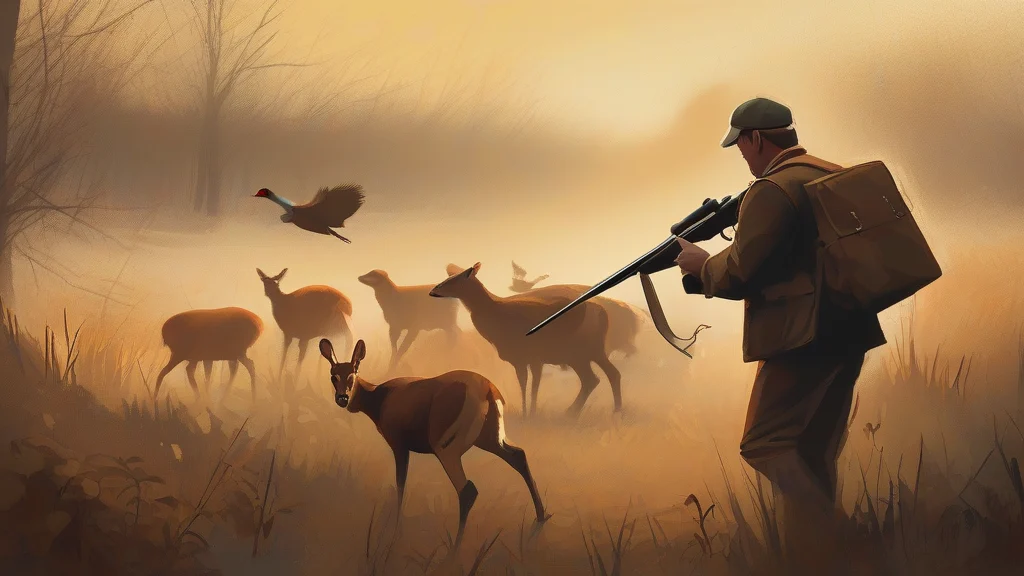
What does gamekeeping mean?
Gamekeeping is the occupation and practice of managing wild game animals — such as pheasants, grouse, and deer — on rural estates or hunting lands. A person engaged in this work is called a gamekeeper, and their duties traditionally include rearing game birds, controlling predators, managing habitat, and preventing poaching, all with the aim of sustaining healthy populations for controlled shooting seasons. The word is deeply rooted in British country life, where the gamekeeper has been a familiar figure on aristocratic estates for centuries, though similar roles exist elsewhere under titles like wildlife manager. The term carries connotations of rural tradition, land stewardship, and continuity with older ways of country living. As a word, it is most strongly associated with Britain and Ireland, and understanding it offers insight into the social history and ecology of managed countryside.
nounThe occupation or practice of managing and protecting game animals, such as deer and pheasants, especially on an estate, typically for hunting or shooting.
- The occupation of breeding, protecting, and managing wild game on an estate, typically for hunting.
"After leaving the army, he took up gamekeeping on a Scottish Highland estate."
"After decades of traditional gamekeeping, the estate's pheasant population had never been healthier."
"She studied gamekeeping at agricultural college before joining a rural land management firm."
As gamekeeping is almost always treated as an uncountable noun denoting an occupation or activity, it has no standard plural form; any plural usage would be highly unusual.
Gamekeepers once patrolled estates at night with lanterns to catch poachers — a cat-and-mouse game that inspired centuries of British countryside folklore.
Reviewed by Deb Chak, Editor. AI-assisted content curated by RJS Tech Solutions LLP.
Etymology of gamekeeping
Gamekeeping derives from 'game', a Middle English term for wild animals hunted for sport or food, combined with 'keeping', from the Old English verb 'cēpan', meaning to guard or care for. The compound reflects the medieval institution of preserving game on noble estates for hunting. Related words include 'gamekeeper', its direct agent form, and cognates such as 'warden' and 'guardian', which share the concept of protective custody over land or creatures.
Related word forms
How gamekeeping is actually used
The term is closely associated with British rural estate culture, where 'the keeper' is a long-standing figure of country life. It carries connotations of tradition, land stewardship, and sometimes class associations tied to landed estates. While used in North America, it is less common there than terms like wildlife management.
Easily confused with gamekeeping
Groundkeeping refers to maintaining grounds and landscapes, whereas gamekeeping concerns managing wild game animals.