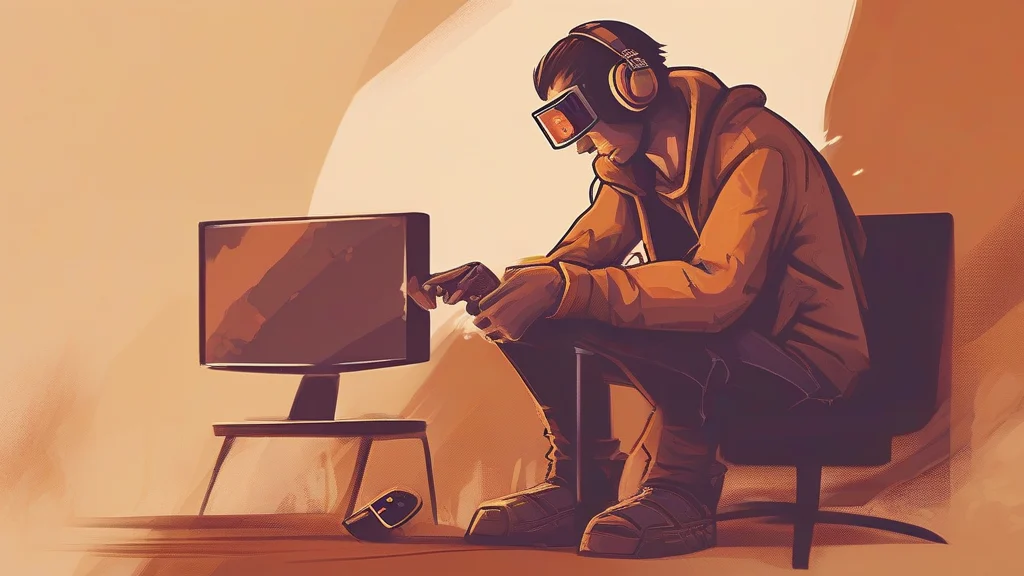
What does gamer mean?
A gamer is a person who plays games—most commonly video games—and the term has become the standard label for participants in one of the world's largest entertainment industries. It ranges from casual use, describing anyone who enjoys playing occasionally, to identity-defining use among dedicated hobbyists, with modifiers like "casual," "hardcore," or "competitive" indicating degree of involvement. A secondary, chiefly North American sense appears in sports slang, where calling an athlete "a gamer" praises their toughness and knack for performing when it counts. Derived from the older English word "game," the term rose to prominence alongside home consoles and personal computers in the late twentieth century and now spans esports arenas, conventions, and online communities. Neutral in tone though sometimes subject to stereotype, "gamer" is useful both descriptively and culturally, marking not just an activity but membership in a broad modern subculture.
A person who plays video games, especially as a dedicated interest or hobby.
"He's been a gamer since childhood, moving from arcade cabinets to high-end PCs."
Modifiers such as "casual," "hardcore," and "competitive" are commonly used to indicate level of involvement.
(North American sports slang) An athlete noted for competing hard and performing well under pressure.
"She may not have the flashiest stats, but she's a gamer in the postseason."
This sense is largely confined to sports commentary and conversation in the United States and Canada.
Standard pluralization; used both collectively for the gaming community and for groups of individual players.
"Online multiplayer brought together millions of gamers across different countries."
"Gamer" only came to mean a video game player in the late twentieth century — the word waited centuries for its true calling.
Reviewed by Deb Chak, Editor. AI-assisted content curated by RJS Tech Solutions LLP.
Etymology of gamer
Gamer derives from "game," an English word tracing back to the Old English "gamen," meaning joy, fun, or amusement. The agent suffix "-er" was attached to form a word for someone who plays games, a formation attested by at least the nineteenth century for players of traditional games. Its modern dominance is recent: the meaning "a person who plays video games" emerged in the late twentieth century as home computing and console gaming spread. Related forms sharing the same root include "gamely," "gaming," and the older coinage "gamester."
How gamer is actually used
The word is informal to neutral and overwhelmingly associated with video games. In North American sports commentary, calling someone "a gamer" is high praise for competitiveness, but this sense is unfamiliar outside that context. The term can carry stereotypes in some discourse, so context and tone matter.
Easily confused with gamer
A gambler bets money on games of chance, whereas a gamer plays games—usually video games—for entertainment or competition.