
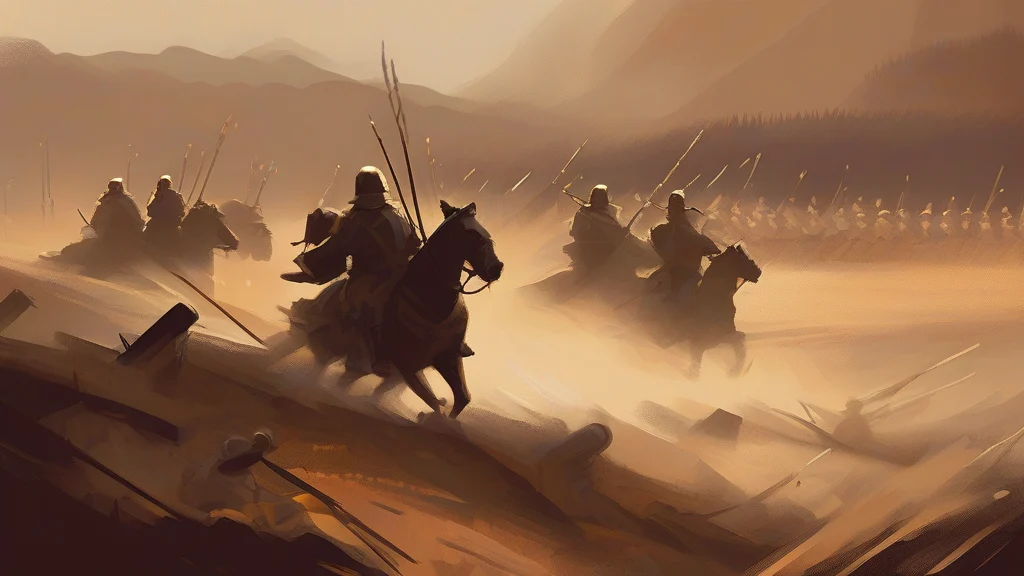
What does garrisoning mean?
Garrisoning is the act of placing troops or other personnel at a particular location to protect it, control access, or support a military position. The word is especially common in military and security contexts, as in “garrisoning the border” or “garrisoning a strategic town.” It can also refer more broadly to maintaining a permanent defensive presence, including in discussions of prisons, embassies, or contested territory. As a verb, garrisoning is the present participle of “garrison”; as a rare noun, it denotes the process or activity rather than the soldiers involved. The related noun “garrison” usually names the troops themselves, their station, or the protected position. Garrisoning has a formal, strategic connotation and is less common in everyday speech, where “stationing” or “deploying” may sound more natural.
To station troops or other personnel in a place so that they guard it, secure it, or provide military support.
"Peacekeepers continued garrisoning the border town throughout the winter."
This is the present participle of “garrison” and is commonly used in military, diplomatic, and security contexts.
The act or process of stationing troops or other personnel in a place to guard it or provide military support.
"The garrisoning of the northern crossing was considered essential to the defence of the region."
This noun use is uncommon; “garrison” is generally preferred when referring to the troops or their station.
Rare. The noun is normally treated as an uncountable activity, so the singular form is much more common.
"The repeated garrisonings of the frontier settlements were widely reported."
A garrison protects a place, but garrisoning is the subtle military art of putting forces into exactly the right place to protect it.
Reviewed by Deb Chak, Editor. AI-assisted content curated by RJS Tech Solutions LLP.
Where does garrisoning come from?
The word comes from “garrison,” which entered English through Old French garnison, ultimately deriving from a Frankish Germanic root associated with preserving or guarding. The historical noun referred to a body of soldiers stationed to defend a place, while the verb came to mean placing troops in such a position. “Garrisoning” developed as the verb’s present participle and gerund and was later also recorded as a noun denoting the act of stationing troops or maintaining a garrison.
Related word forms
How garrisoning is actually used
The word is chiefly military and formal. As a verb, it is normally used in the present participle, as in “garrisoning the border,” or in constructions such as “the troops were garrisoned in the town.” The noun use is uncommon, and “garrison” is usually more natural when referring to the troops themselves or the military post.
Easily confused with garrisoning
A garrison is the body of troops stationed at a particular place, whereas garrisoning is the act or process of placing and maintaining such troops there.