
What does garrison mean?
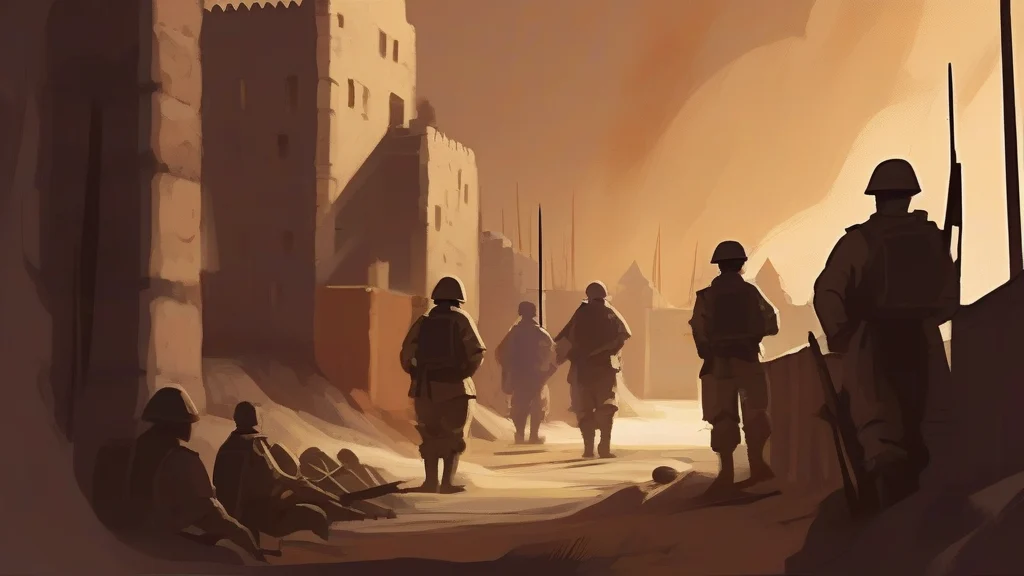
Garrison most often names a group of soldiers stationed at a strategic location, such as a border, island, fortress, or remote installation. The word can also refer to the place itself: a garrison may be a military post or fortified settlement whose purpose is to hold troops and defend an area. In British English, a further meaning is a military prison. As a verb, to garrison something means to station troops there or secure it with a military presence. The word often carries a formal and military tone, suggesting defense, duty, controlled access, and the practical organization of soldiers away from larger forces. In everyday writing, it is especially useful when precision matters—for example, distinguishing the troops stationed at a location from the location itself. Its established compounds, including “garrison duty,” “garrison troops,” and “station a garrison,” reflect its long-standing association with military life and the administration of defended posts.
A body of troops stationed at a particular place or assigned to a particular duty; also a fortified place or military post occupied by troops, and less commonly a military prison.
"A small garrison guarded the mountain pass."
The word can refer either to the soldiers themselves or, in the more established second sense, to their post. The prison sense is particularly associated with British English.
To station troops in a place, or to occupy and defend a place with a military force.
"The government sent an engineering unit to garrison the remote pass."
This is a formal military verb commonly used in reports, historical accounts, and strategic descriptions.
The standard plural of the noun, used for separate military bodies or posts.
"Several garrisons were established along the frontier."
A garrison can mean a fortified post, the troops occupying it, or—less commonly—a military prison.
Reviewed by Deb Chak, Editor. AI-assisted content curated by RJS Tech Solutions LLP.
Where does garrison come from?
The English word entered Middle English from Old French garnison, meaning a fortified place or a body of troops assigned to guard one. The French word came from garnir, “to fortify, equip, or provide with troops,” which was ultimately borrowed from a Germanic source. The same French verbal family also produced English words such as garnish, garnisheed, and garnishee, although their modern meanings developed along different paths.
Related word forms
How garrison is actually used
The noun is commonly collective, referring to a military unit as a whole. The verb is relatively formal and frequently describes placing or maintaining troops at a strategic location. In British English, garrison can also mean a military prison.