
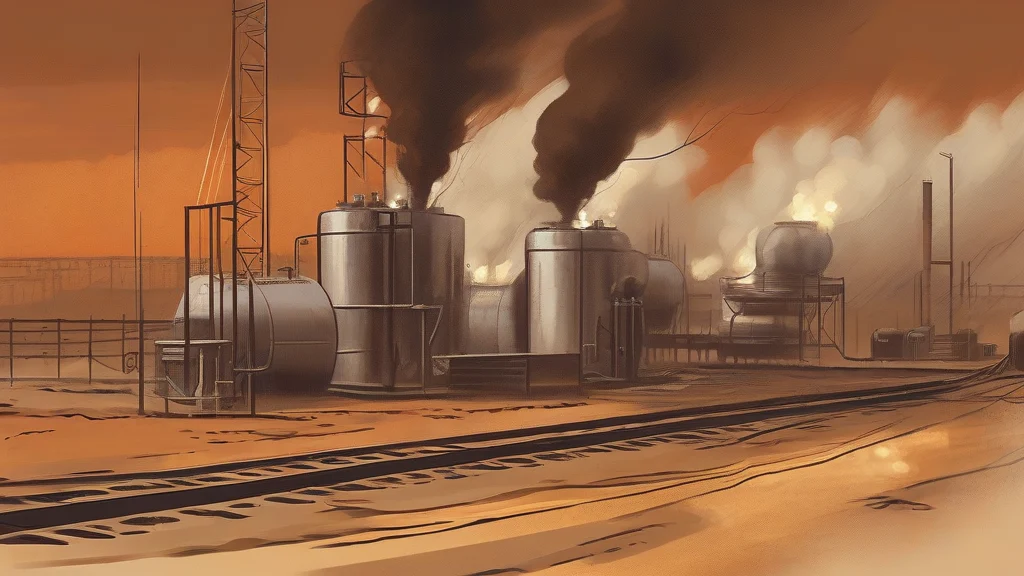
What does gasifying mean?
Gasifying means converting a material into gas. The word is especially common in energy and industrial contexts, where coal, biomass, or other carbon-containing fuels are heated in a controlled, often oxygen-limited environment to produce combustible gas. This gas may be used directly as fuel or separated into components such as hydrogen, carbon monoxide, and methane. The term can also have a broader everyday meaning: describing the vaporization of a liquid or other substance. For example, one might say that a heated liquid is gasifying, although this is less precise than saying it is evaporating or boiling. Gasification is distinct from simple combustion, because the goal is often to preserve or produce useful gaseous products rather than burn the material completely. The word is consequently associated with industrial processes, energy conversion, and modern efforts to use waste and renewable biomass as fuel.
verbConverting a material into gas, especially by heating a solid fuel or biomass in a controlled environment. It can also mean causing a substance to vaporize.
- To convert a material into gas, especially by heating a solid fuel or biomass in a controlled atmosphere.
- To cause a liquid or other substance to vaporize.
"The new furnace gasifies coal efficiently, producing a combustible mixture of gases."
"The plant is gasifying agricultural waste to produce syngas for a power generator."
"Heated gently, the liquid began gasifying and escaped as vapour."
Gasifying coal once helped cities manufacture gas for street lighting; today, the same process can turn waste biomass into hydrogen-rich fuel.
Reviewed by Deb Chak, Editor. AI-assisted content curated by RJS Tech Solutions LLP.
Etymology of gasifying
Gasifying is an inflected form of gasify, which was formed by adding the productive suffix -ify, meaning “to make” or “turn into,” to gas. The English word gas was borrowed from Dutch gas, ultimately derived from New Latin gasum and associated with Greek khēma, meaning “steam” or “vapour.” The chemical sense of gas was popularized in the 17th century by the Belgian physician and chemist Jan Baptista van Helmont. The related noun gasification developed later as the process became important in industrial fuel and chemical contexts.
Related word forms
How gasifying is actually used
Gasifying is most common in technical and industrial contexts, particularly energy production and chemistry. In broader usage, it can mean vaporizing a liquid, but it often implies a controlled conversion process rather than simple evaporation.
Easily confused with gasifying
Gasifying specifically means converting a material into gas, whereas gassing can mean producing gas, exposing someone to a gas, or poisoning them with gas.