
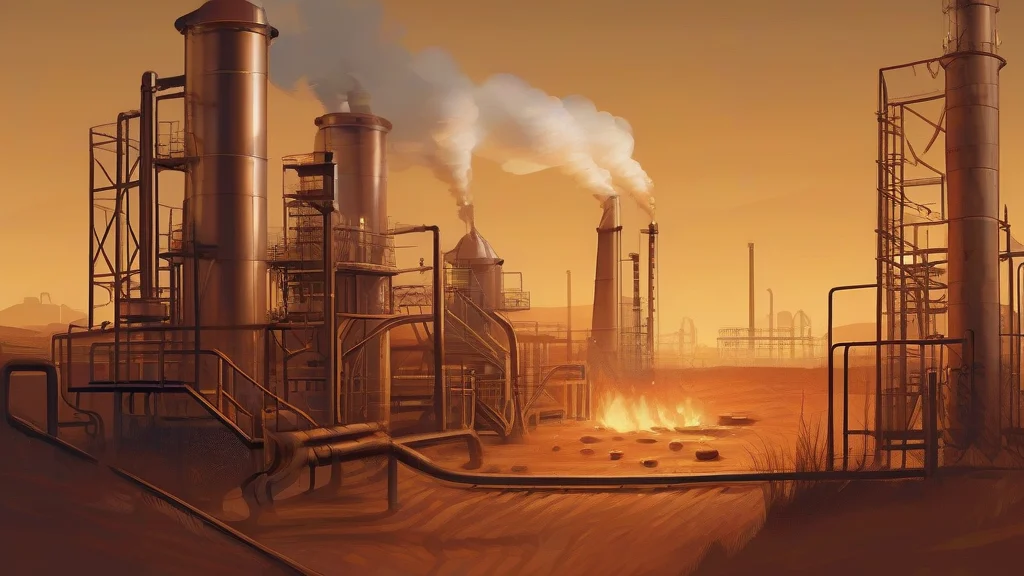
What does gasification mean?
Gasification is the conversion of a material, especially a solid or liquid fuel, into gas. The process is usually carried out by heating the material in a controlled atmosphere with limited oxygen, producing combustible gases such as hydrogen, carbon monoxide, and methane. It is important in coal and biomass energy systems, hydrogen production, and the manufacture of synthetic fuels. Gasification differs from ordinary combustion because it limits the amount of oxygen available, allowing partly reacted gases to be collected before complete burning occurs. The word is chiefly technical and is commonly associated with coal gasification, biomass gasification, and industrial gasification plants. Although it shares a broad meaning with vaporization, gasification usually describes a more complex chemical or thermal transformation rather than simply the boiling of a liquid.
nounThe process of converting a material, especially a solid or liquid fuel, into gas. In energy technology, the term usually refers to producing a combustible gas such as hydrogen, carbon monoxide, or methane by heating material in a controlled atmosphere with limited oxygen.
- The process of converting a solid or liquid material into gas, especially by heating it in a controlled atmosphere with limited oxygen.
- The industrial or chemical process of producing a combustible or synthetic gas from solid or liquid fuel.
"Coal gasification produces a combustible gas that can be used to generate electricity."
"Biomass gasification is being used to produce hydrogen for a clean-energy plant."
"The researchers compared the gasification of coal with the more rapid combustion of the same material."
The plural is uncommon; the uncountable form is usual when referring to the process in general.
"The study compares several gasifications of agricultural waste under different temperature conditions."
Gasification turns materials such as coal and biomass into a gas that can be burned or used to make hydrogen and other useful fuels.
Reviewed by Deb Chak, Editor. AI-assisted content curated by RJS Tech Solutions LLP.
Where does gasification come from?
Gasification is an English formation made from “gas” and the suffix “-ification,” meaning conversion into a specified state or substance. The word developed alongside the use of manufactured and combustible gases in industrial contexts, especially during the expansion of gas-making technology in the 19th century. Its related forms include “gaseous,” “gasometer,” “gasworks,” and “gasify,” all of which extend the same English word family based on “gas.”
Related word forms
How gasification is actually used
Chiefly a technical term in energy, chemical engineering, and environmental technology. It normally implies a controlled conversion process rather than the simple release of gas or the ordinary boiling of a liquid.
Easily confused with gasification
Vaporization is the physical change of a liquid into vapor, whereas gasification commonly refers to a chemical or thermal process that converts solid or liquid material into gas.
Liquefaction converts a gas into a liquid, while gasification performs the opposite broad transformation by converting material into gas.