
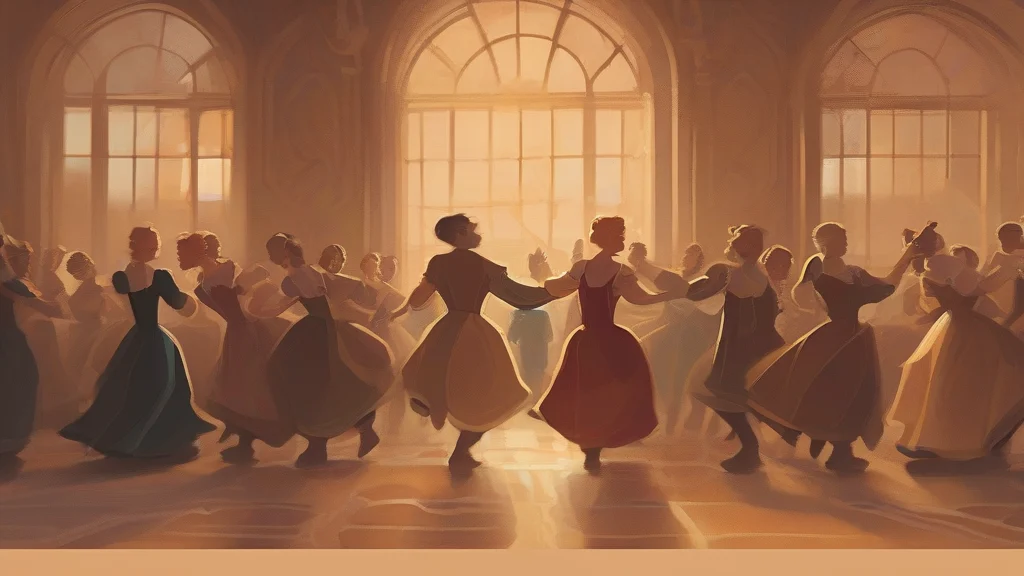
What does gavot mean?
A gavot is a traditional French dance that was especially fashionable in the eighteenth and early nineteenth centuries. It is generally counted in duple meter, commonly two-four time, and is marked by sliding steps and small jumps. In musical contexts, a gavot may refer either to the dance itself or to instrumental music written in its rhythm, sometimes as one movement of a suite. The term is uncommon in everyday modern English and sounds formal and historical rather than social, so it often appears in writing about Baroque or eighteenth-century dance. A closely related spelling, gavotte, is also used in English. Although the dance became associated with the French court, it has roots in the south of France, and its arrival in English followed the fashion for European court dance and music. Knowing the word adds useful precision: a gavot is a particular dance and metrical tradition, not merely any old-fashioned dance or an arbitrary lively instrumental piece.
nounA traditional French dance originating in Provence, performed in duple meter with sliding steps and small jumps. The term can also refer to instrumental music written in the rhythm of the dance.
- A traditional French dance in duple meter, typically performed with sliding steps and small jumps.
- An instrumental composition or movement written in the rhythm of the gavot.
"The dancers opened the suite with a stately gavot."
"The ball included a gavot danced with precise, formal steps."
"The ensemble's final movement was a brisk gavottelike gavot in two-four time."
The standard plural is gavots.
"The program included two gavots by the same composer."
A country dance with courtly manners, the gavot came from the south of France before becoming an aristocratic favorite.
Reviewed by Deb Chak, Editor. AI-assisted content curated by RJS Tech Solutions LLP.
Where does gavot come from?
The English word was borrowed from French gavot, with the related form gavotte also widely used. The dance name is generally traced through Provençal to a southern French rural tradition before the dance spread among the French aristocracy. Comparable names for the dance survive in other Romance languages, including French gavotte, Spanish and Portuguese gavota, and Italian gavotta.
How gavot is actually used
The word is uncommon in everyday modern English and sounds historical, formal, and musical. It is most often encountered in discussions of European court dance, Baroque music, or period performance.
Easily confused with gavot
Gavotte is an alternative English spelling for the same French dance and the music written in its rhythm.