
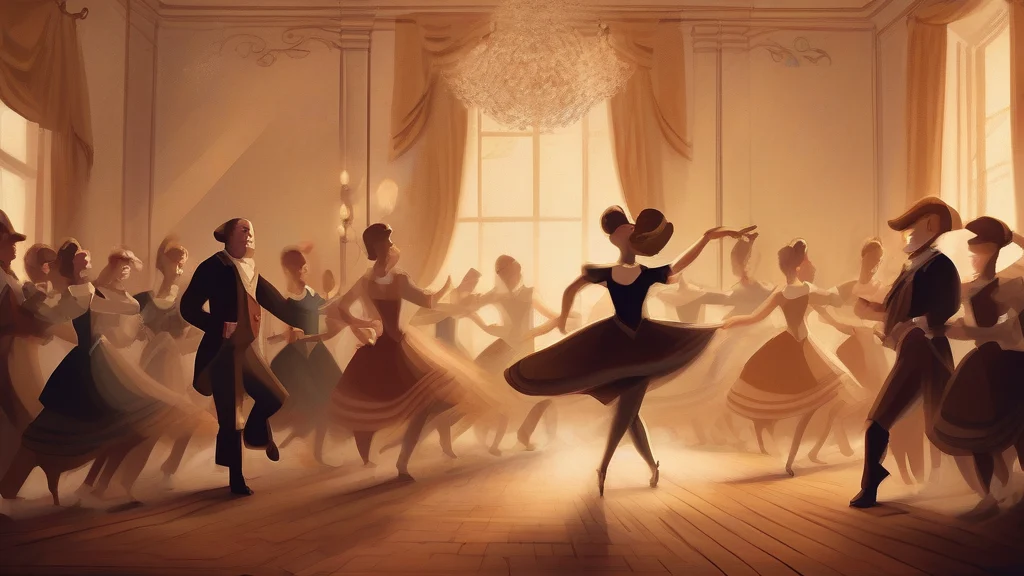
What does gavotte mean?
A gavotte is a lively, elegant dance in duple time that was especially fashionable in the 17th and 18th centuries. The term can also mean instrumental music written for the dance or arranged in its characteristic rhythm. In literary and historical contexts, “to gavotte” means to perform the dance itself. A gavotte is usually moderate in tempo, with a strong, regular pulse and a pattern of short rhythmic figures. It appears frequently in descriptions of court entertainments, eighteenth-century social life, and instrumental music, where dances such as the minuet and pavane provide close comparators. Today the word chiefly survives in musical terminology, historical narration, and discussions of dance history rather than in everyday speech. Its usefulness lies in naming a specific historical dance form and its music with precision, while also preserving the elegant sound of a word associated with aristocratic entertainment and musical tradition.
A lively, elegant dance in duple time; also, instrumental music composed for or in the style of that dance.
"The program included a gavotte for solo violin and continuo."
Most common in historical, literary, dance-history, and musical contexts.
To dance a gavotte.
"They gavotted across the ballroom in perfect time with the orchestra."
Rare and literary; normally appears in descriptions of historical dances.
The plural is used for individual dances or, in musical contexts, separate movements or pieces of music in the dance form.
"The program included two gavottes for solo violin."
The popular French explanation that the name means "gave them three" is a charming folk etymology, not the word's actual origin.
Reviewed by Deb Chak, Editor. AI-assisted content curated by RJS Tech Solutions LLP.
Where does gavotte come from?
English borrowed the word from French in the early 18th century. French gavotte is generally traced to Provençal gavot, a term associated with inhabitants of the Gap region in the French Alps, where the dance became closely linked with the area. The familiar French explanation “gave aux trois” is a later folk etymology rather than the word's historical source.
Related word forms
How gavotte is actually used
The noun is chiefly historical, literary, or musicological. It remains established in discussions of dance history and instrumental repertoire but is uncommon in everyday speech. The verb is rare and literary.
Easily confused with gavotte
Gavot can refer to a member of the Alpine people historically called the Gavots, whereas gavotte denotes the dance or music associated with that name.