
What does pavane mean?
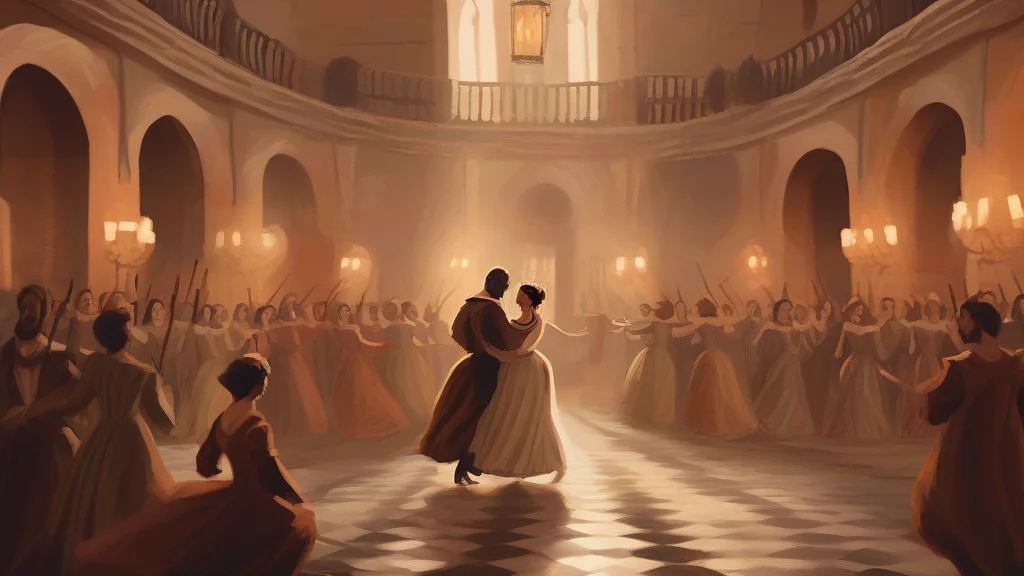
A pavane is a slow, stately court dance associated especially with Renaissance and Baroque Europe. Performed to dignified music, commonly in triple meter, it emphasizes controlled movement and a ceremonial character rather than speed or athletic display. The word is now encountered most often in music history, concert programming, and descriptions of historical dance. It may refer either to the dance itself or to the instrumental composition written for it. Because the pavane was closely associated with formal court entertainments, it carries an atmosphere of dignity, restraint, and aristocratic tradition. Its name ultimately derives from the Latin word for a peacock, an image that evokes the bird’s proud bearing and measured walk. The form is often discussed alongside the galliarda, a livelier dance that could follow it. Although modern dancers may reconstruct or perform the pavane, it is not ordinarily used for contemporary informal dancing.
nounA slow, stately Renaissance court dance, typically performed in triple meter and characterized by dignified, processional movements. Its music is often associated with the similarly measured galliarda.
- A slow and stately court dance, especially one of the Renaissance period, typically in triple meter.
"The musicians opened the concert with a pavane composed for the court."
"The choreography for the pavane emphasized smooth, measured steps."
"A Baroque programme alternated a formal pavane with faster instrumental dances."
The plural is used when referring to multiple dances or pieces of music.
"The suite included two pavanes by different composers."
The pavane turns the proud stride of a peacock into music: a Renaissance dance whose stately dignity gave the word “pavane” its enduring air of ceremonial grandeur.
Reviewed by Deb Chak, Editor. AI-assisted content curated by RJS Tech Solutions LLP.
Where does pavane come from?
The English word comes through French pavane from Provençal pava, “peacock,” ultimately from Latin pavo. The name is traditionally associated with the peacock’s proud, stately walk and with the dignified character of the dance. Related forms survive in languages such as Spanish and Italian, while the same Latin root also underlies the English word peacock.
How pavane is actually used
The term is mainly musicological and historical. It describes a dance and its associated music rather than ordinary social dancing today.