
What does geest mean?
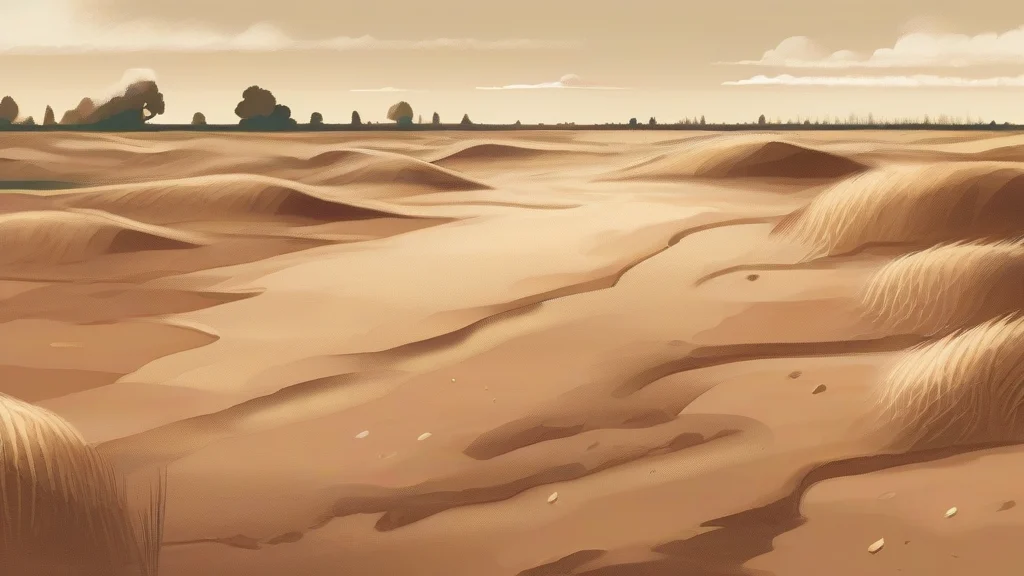
Geest is a specialist geographical noun for loose sandy soil and, by extension, the sandy ground or terrain formed by such deposits. Its use is concentrated in descriptions of northern Germany, the Netherlands, and neighbouring parts of the North Sea region. In these settings, geest often refers to broad, dry, and relatively infertile sandy landscapes rather than merely a handful of grains; depending on context, it can denote the soil itself, a deposit, or a tract of country. The word should not be used as a general synonym for sand, since it carries a more specific geomorphological and regional meaning. Although uncommon in everyday British and American English, geest is useful in historical geography, soil science, and place-name study because it identifies a characteristic northern European environment. It also illustrates how regional vocabulary can preserve distinctions that broader English terms flatten.
nounA type of loose sandy soil, especially the extensive sandy deposits found in northern Germany and the Netherlands. The term may also denote sandy ground or a tract of sandy terrain.
- Loose sandy soil or sandy ground, especially the deposits or terrain characteristic of northern Germany and the Netherlands.
"The lower layers consist of loose geest, with firmer clay beneath."
"The sandy geest supports pine woodland but is difficult to cultivate."
"The lowland consists largely of geest, extending inland from the coast."
Usually treated as a mass noun; the plural is uncommon and is used when distinct areas or deposits are being counted.
"The survey mapped several distinct geests near the coast."
In northern Europe, “beach” is not always the right word: geest is the vast inland expanse of old, loose sand.
Reviewed by Deb Chak, Editor. AI-assisted content curated by RJS Tech Solutions LLP.
Etymology of geest
The English noun was borrowed from Low German, where gest or geest referred to sandy earth, soil, or land. It is cognate with Dutch geest and German Geest, and its Proto-Germanic ancestry has also been connected with the forms behind English guest and ghost. The word entered English during the 17th century, in a period of increasingly detailed geographical descriptions of the North Sea region.
How geest is actually used
This is chiefly a regional geological and geographical term associated with northern Germany, the Netherlands, and the wider North Sea region. It is uncommon in ordinary British and American English and is not simply a general synonym for sand.