
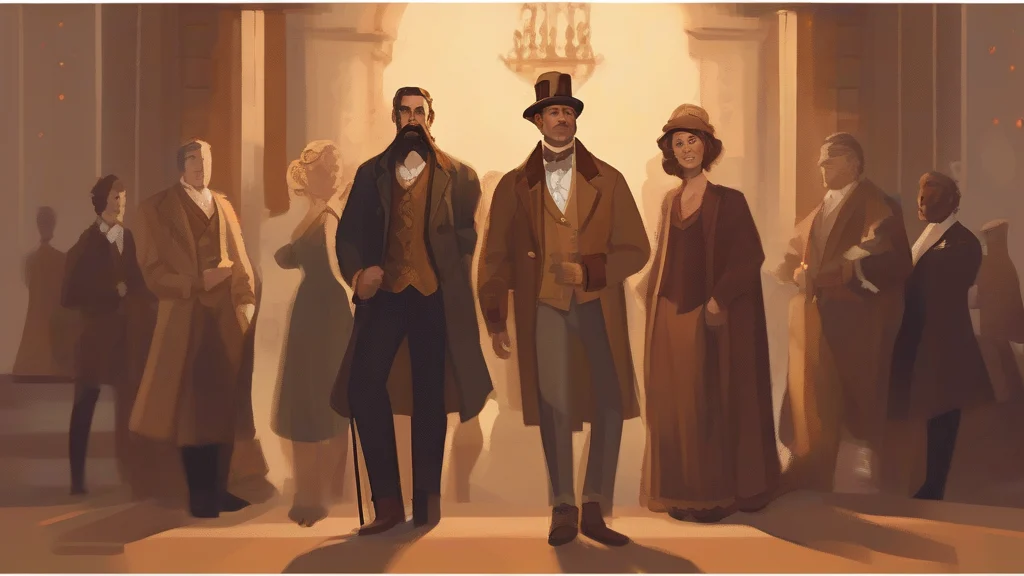
What does gentry mean?
Gentry denotes a social class associated with wealth, land, ancestry, and established social position. In its most characteristic British sense, it refers to landed proprietors and their families standing below the formal nobility, especially during the period when aristocratic and county societies were prominent. The term can also appear more broadly in literary English for people distinguished by refined manners or high social standing, although this older usage may sound dated. Although the class is often associated with large estates, modern usage is mainly historical or literary rather than a precise description of contemporary social hierarchy. The word is related to a wider family derived from Latin gentilis, including gentle, gentleman, genteel, and gentility. Because it combines social rank with the suggestion of cultivated behavior, gentry is especially useful when discussing how class, inheritance, and social prestige shaped identity, politics, and culture.
nounThe gentry, especially in British usage, is the class of wealthy or landed people below the nobility, typically including landowners and their families. In broader literary use, it can also denote people regarded as refined or of high social standing.
- The class of wealthy or landed people below the nobility, especially in historical British usage.
- People regarded as refined, courteous, or of high social standing.
"The old country house had once been the home of the local landed aristocracy."
"Members of the local gentry attended the opening of the new parish hall."
"She spoke with the easy confidence of someone raised among the gentry."
The plural gentries is grammatical but uncommon; gentry is normally used collectively and often takes a plural verb in British English.
"The two great gentry families maintained a long rivalry."
Once defined more by ancestry than wealth, the gentry was a class of gentle birth before it became associated with the landowners below the nobility.
Reviewed by Deb Chak, Editor. AI-assisted content curated by RJS Tech Solutions LLP.
Where does gentry come from?
The word entered Middle English as genterie from Old French genterie, meaning noble birth or the nobility, ultimately derived from Latin gentilis, “of a gens or family.” Its early sense centered on high birth and social standing before the meaning developed toward the class of landowners below the peerage. It belongs to the same etymological family as gentle, gentleman, genteel, and gentility.
Related word forms
How gentry is actually used
The word is formal and somewhat literary in modern English. It is particularly associated with the historical British landed class, while its broader sense—refined or socially distinguished people—can sound old-fashioned.
Easily confused with gentry
Gentry is a social class, whereas gentility refers more commonly to refined manners or polite behavior.