
What does germination mean?
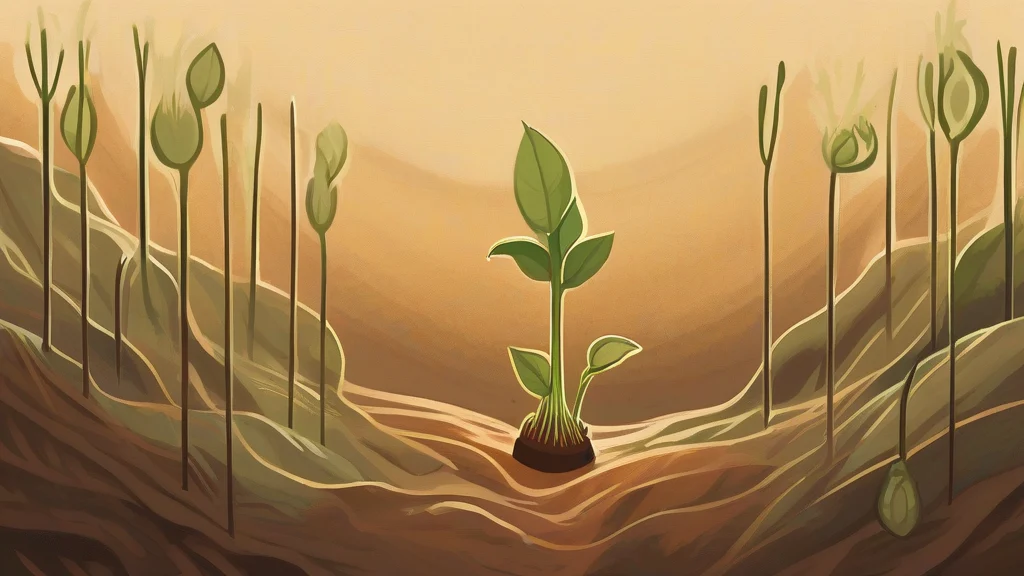
Germination names the process by which something begins to grow or develop. In its principal biological sense, it describes the start of a seed’s growth, when the dormant embryo becomes active and a young plant begins to emerge. This process depends on suitable conditions, especially moisture, temperature, and oxygen, although the precise requirements vary among plant species. Germination is also widely used figuratively. The germination of an idea can mean its first emergence, while the germination of a movement or organization can mean its gradual expansion from a small beginning. The word is more formal and technical than "sprouting," but it remains clear and useful in both scientific and general contexts. Its figurative use often suggests an organic process: something develops naturally from an initial source rather than appearing suddenly or without preparation. Because it captures both biological growth and the slow emergence of new activity, germination is a precise word for beginnings that have the potential to become substantial.
nounThe process by which a seed begins to grow, usually producing a young plant. Figuratively, it refers to the beginning or gradual development of an idea, movement, project, or other phenomenon.
- The biological process by which a seed begins to grow and a plant embryo emerges.
- The beginning or gradual development of an idea, movement, institution, or other phenomenon.
"After a week of rain, germination of the seeds in the garden had begun in earnest."
"Warm temperatures and sufficient moisture are essential for germination in many species."
"The germination of the movement from a small local campaign into a national organization was swift."
The plural is grammatically correct but uncommon; most discussions use the singular mass noun "germination."
"The early germination of a few species enabled the plants to survive the frost."
A dormant seed can wait in darkness for years, but when conditions are right, germination begins and new life starts.
Reviewed by Deb Chak, Editor. AI-assisted content curated by RJS Tech Solutions LLP.
Where does germination come from?
The English word comes through Latin "germinatio," a noun derived from "germinare," meaning "to sprout" or "to put forth shoots." The underlying Latin word "germen" referred to a seed, bud, or sprout. English developed related forms including "germ," "germinate," and "germinal," which reflect the same Latin root and its associations with growth and seeds.
Related word forms
How germination is actually used
The term is neutral in register but is more formal and technical than everyday alternatives such as "sprouting." Its biological sense is especially common in agriculture, botany, and environmental science, while the figurative sense is used in discussions of ideas, movements, creativity, and institutional development.