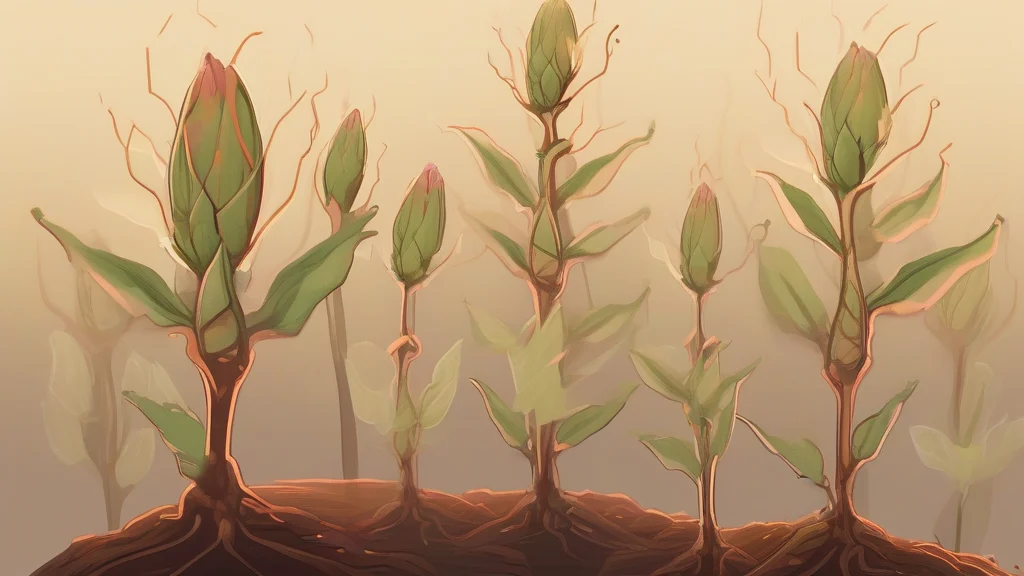
What does budding mean?
"Budding" describes something at the very start of its development, especially when there are signs of future success. Most often used as an adjective, it attaches readily to people and their pursuits: a budding artist, a budding entrepreneur, a budding romance all suggest early growth with real promise ahead. The word takes its sense directly from botany, where a bud is the small swelling on a plant that will open into a flower or leaf; figuratively, then, a budding career is one just putting out its first shoots. The term carries a distinctly positive, hopeful connotation — unlike neutral words such as "early" or "new," budding implies latent talent worth encouraging. In horticulture, budding also names a grafting method in which a single bud from one plant is inserted into another, allowing gardeners to propagate roses, fruit trees, and other species with precision. Whether applied to gardens or to human ambition, the word captures that fragile, exciting moment before full bloom.
Beginning to grow or develop; showing signs of promise or future success.
"The festival gives budding filmmakers a chance to screen their first shorts."
Almost always used attributively, before the noun it modifies.
In horticulture, the practice of grafting in which a bud taken from one plant is inserted under the bark of another so that it grows there.
"T-budding in late summer is a reliable way to propagate fruit trees."
Rarely used; the noun form is almost always uncountable when referring to the grafting technique.
"Late summer is the season for several kinds of buddings, though most gardeners simply say budding."
"Budding" literally borrows from botany: English speakers saw new writers, actors, and romantics as plants putting out their first buds — a metaphor so natural we forget it was ever a figure of speech.
Reviewed by Deb Chak, Editor. AI-assisted content curated by RJS Tech Solutions LLP.
Etymology of budding
"Budding" derives from "bud," a Middle English word of uncertain ultimate origin — possibly related to Old French "bourgeon" (a shoot or bud) or to a Low German source — which came to mean any young, undeveloped outgrowth. From the plant sense arose both the literal use for plants producing buds and the figurative application to people or things in an early stage of development. The adjective form became well established in English during the seventeenth century and has remained a standard way to express emergent promise ever since.
Related word forms
How budding is actually used
"Budding" carries a warm, hopeful connotation when applied to people and their talents — a budding writer is expected to flourish. It is most common attributively (a budding chef), rather than predicatively. In strict horticultural contexts it retains its literal botanical sense.
Easily confused with budding
Budding means developing or beginning to grow, while Buddha refers to Siddhartha Gautama, the founder of Buddhism — they share no meaning despite the similar opening letters.