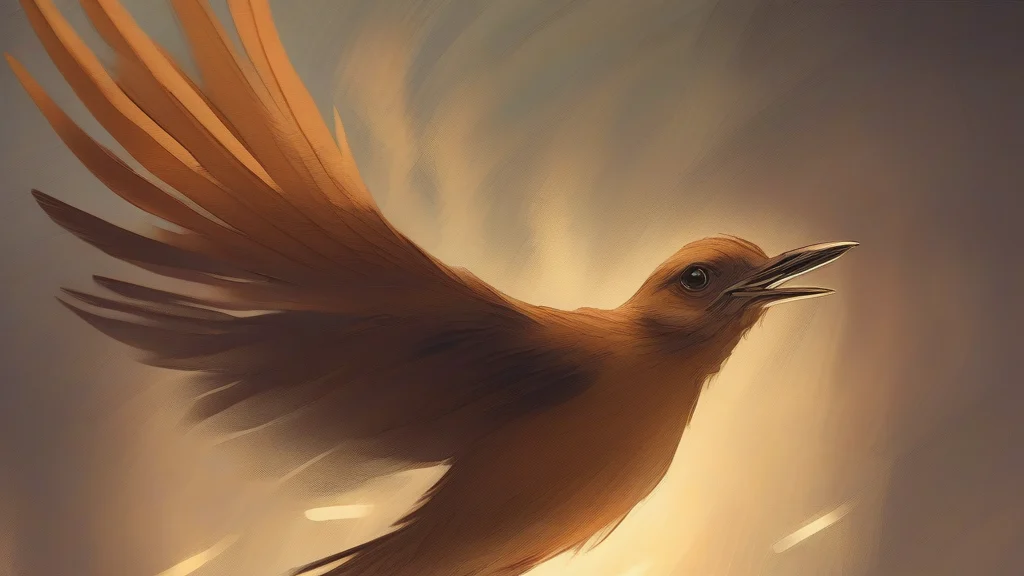
What does fledgling mean?
A fledgling is, in its original sense, a young bird that has developed the feathers needed for flight and has begun venturing from the nest. The word derives from the verb 'to fledge', meaning to grow the plumage necessary for flying. Over time, English speakers extended this image into everyday use, so that 'fledgling' now commonly describes anything newly established and still untested: a fledgling company, a fledgling democracy, a fledgling writer. The connotation is generally hopeful rather than critical, emphasizing youth, promise, and early development instead of failure. The word can serve as both a noun and an adjective, and it appears frequently in journalism and business writing, where organizations and initiatives are often described as fledgling during their formative stages. Its enduring appeal lies in the vivid picture behind it: something small and unsteady taking its first leap toward independence.
A young bird that has recently acquired its flight feathers; by extension, any new and inexperienced person, organization, or enterprise.
"The sanctuary cares for fledglings found separated from their parents each spring."
The figurative sense is now more common than the literal one outside ornithological contexts.
Newly begun, recently created, and not yet fully developed or experienced.
"She joined the magazine during its fledgling years, when the staff numbered only five."
Used attributively before nouns such as company, republic, industry, or writer.
Regular plural formation; used for both the literal bird sense and figurative senses.
"The hedgerow was noisy with fledglings calling to be fed."
A fledgling is literally a bird old enough to leave the nest — which is why we borrow the word whenever a startup, government, or career is bold enough to try flying on its own.
Reviewed by Deb Chak, Editor. AI-assisted content curated by RJS Tech Solutions LLP.
Etymology of fledgling
Fledgling comes from the verb fledge, meaning to acquire the feathers necessary for flight, which descends from Old English 'flycge' (or 'flegde'), related to 'fleogan', meaning to fly. The noun fledgling emerged in the early nineteenth century as an extension of the older adjective 'fledged', formed by adding the '-ling' suffix that denotes something young or diminutive, as in duckling and gosling. The figurative application to inexperienced people and enterprises followed naturally from the literal bird sense.
Related word forms
How fledgling is actually used
The literal bird sense is chiefly used by birdwatchers and ornithologists; in general speech the figurative sense dominates. As an adjective ('a fledgling democracy'), it carries no negative judgment — it emphasizes newness and potential rather than incompetence.
Easily confused with fledgling
Fledgeling is simply an older or British variant spelling of the same word, with no difference in meaning.