What does fledged mean?
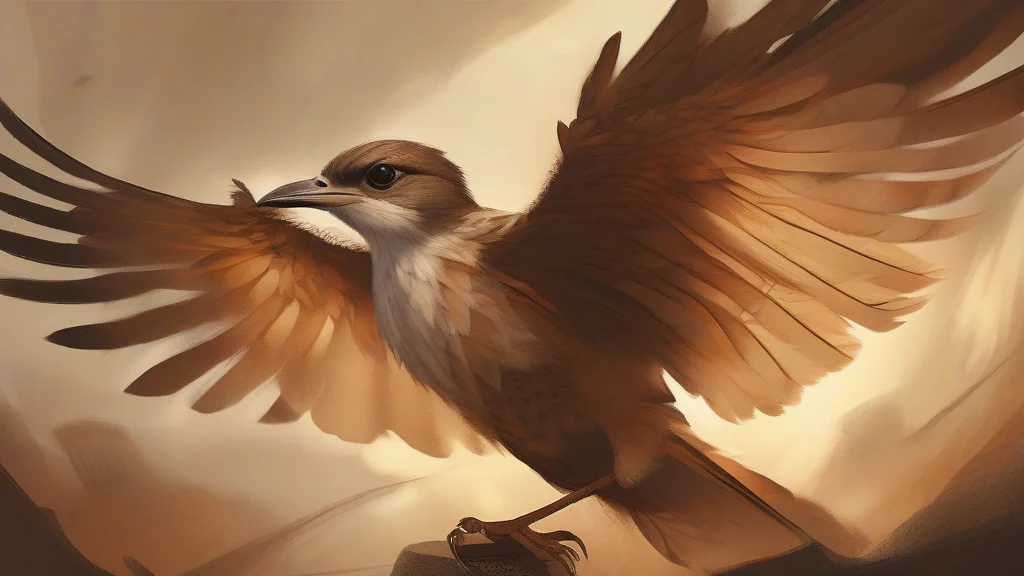
Fledged describes a state of readiness: literally, it refers to a young bird that has grown the feathers needed to fly, and figuratively, it signals that something has reached full development or official status. In everyday language the word rarely travels alone; it appears overwhelmingly in the compound form 'full-fledged', attached to businesses, doctors, democracies, and careers that have completed their journey from embryo to maturity. A newly fledged bird stands at the threshold of its first flight, and the phrase borrows that vivid image for any person, institution, or project graduating from tentative beginnings into confident competence. The word's roots lie in Anglo-Saxon terms for flight, giving it a lineage older than most English expressions of growth and completion. Whether applied to an owl leaving the nest or a startup launching its first product, 'fledged' conveys achievement, readiness, and the satisfying moment when potential finally becomes capability.
Fully developed or complete; (of a bird) having the feathers necessary for flight.
"By autumn, the orphaned owlets were fully fledged and hunting on their own."
Most frequently encountered as 'full-fledged'; the standalone form 'fledged' typically implies recent feathering in an ornithological context.
Past participle of the verb 'fledge': to rear a young bird until it can fly, or to furnish with feathers.
"The pair had successfully fledged four chicks that season."
'Full-fledged' carries a piece of medieval falconry vocabulary into modern boardrooms — every time you say it, you're echoing an ancient word for a bird ready to leave the nest.
Reviewed by Deb Chak, Editor. AI-assisted content curated by RJS Tech Solutions LLP.
Etymology of fledged
Fledged derives from the Old English word 'fleanx'-rooted term for feathered, specifically from 'fledge' (Old English 'flycge'), related to 'fleoge' and ultimately to the Germanic root behind 'fly' and 'flight', meaning able to fly. The sense of acquiring flight feathers gave rise to the figurative use, and by at least the 17th century writers were using 'fledged' to describe people or enterprises reaching full development. Its close companion 'fledgling' emerged later from the same nest of ideas, describing the bird — or the inexperienced newcomer — before full maturity.
Related word forms
How fledged is actually used
'Fledged' appears most often today inside the compound 'full-fledged', where it means complete or having full status rather than literally feathered. The literal ornithological sense is common in nature writing and birding contexts. In formal writing, 'full-fledged' is standard for describing organizations, professionals, or movements that have reached full development.
Easily confused with fledged
A fledgling is a young bird that has just acquired its feathers and is learning to fly (or, figuratively, something new and inexperienced), whereas 'fledged' describes that state of being feathered or fully developed itself.