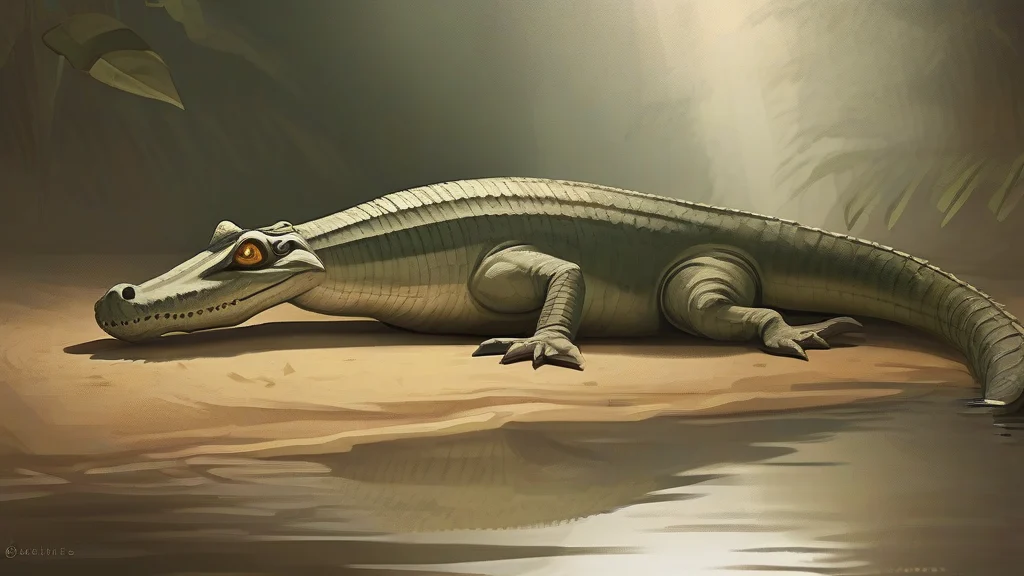
What does gharial mean?
The gharial is a unique and fascinating reptile that belongs to the crocodile family. Characterized by its long, narrow snout, it is well adapted to its aquatic environment and primarily feeds on fish. Found in freshwater environments in India and Southeast Asia, the gharial is an endangered species due to habitat loss and hunting. Its distinctive appearance and feeding habits make it an interesting subject for study and conservation efforts. The gharial plays a vital role in maintaining the ecological balance of its native habitats. As a carnivorous reptile, it helps regulate the populations of fish and other aquatic animals. Overall, the gharial is an important and intriguing species that warrants continued research and protection.
nounThe gharial is a large, carnivorous reptile that belongs to the crocodile family, characterized by its long, narrow snout. It is primarily found in freshwater environments in India and Southeast Asia.
- A large, carnivorous reptile of the crocodile family.
- A species of crocodilian, Gavialis gangeticus.
"The gharial basked in the sun on the riverbank, its long snout pointed upwards."
"The gharial is an endangered species due to habitat loss and hunting."
"Gharials are known for their distinctive snouts, which are ideal for catching fish."
The plural form 'gharials' is used to refer to multiple individuals of the species.
"The conservation efforts aimed to protect the gharials and their habitats."
Reviewed by Deb Chak, Editor. AI-assisted content curated by RJS Tech Solutions LLP.
Etymology of gharial
The term 'gharial' originates from the Hindi word 'ghara', meaning 'pot' or 'jar', likely referring to the reptile's distinctive long, narrow snout. The word has been adopted into various languages, including English, to describe this unique species. The gharial's scientific name, Gavialis gangeticus, reflects its geographical distribution and taxonomic classification.
How gharial is actually used
The term 'gharial' is primarily used in formal and scientific contexts, particularly in reference to conservation and wildlife studies. In informal contexts, it may be referred to as a 'fish-eating crocodile'.