
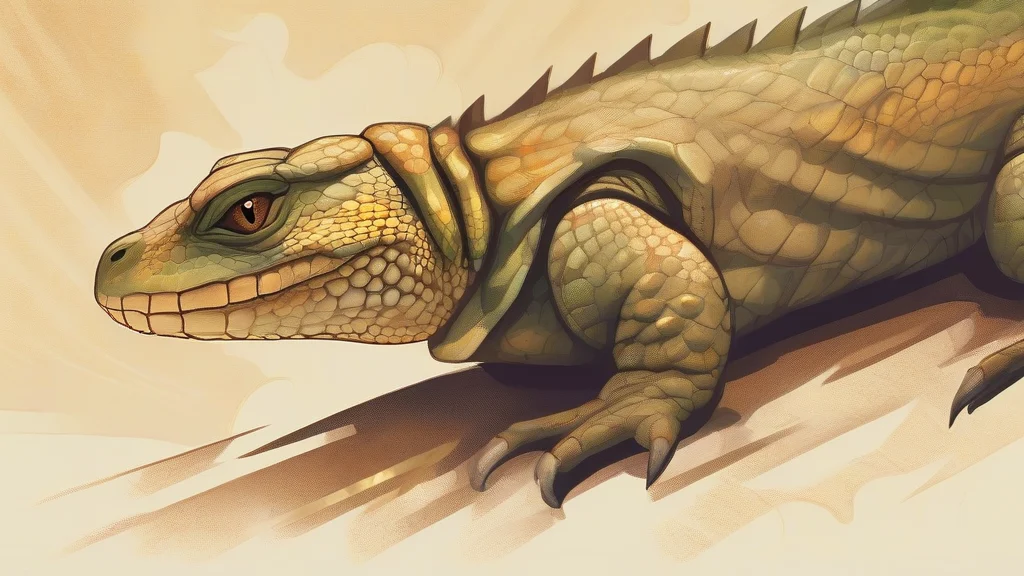
What does reptile mean?
A reptile is a vertebrate belonging to a major animal group that includes snakes, lizards, turtles, tortoises, and crocodilians. Reptiles usually have dry, scaly skin, breathe with lungs, and are ectothermic, meaning their body temperature depends largely on their surroundings. Most reproduce by laying eggs, although some species give birth to live young. The word also has an older figurative sense for a crawling, contemptible, or deceitful person, but that usage is now considered offensive and should be avoided in neutral writing. In everyday conversation, reptile is commonly used specifically for snakes and lizards, while zoological contexts use it for the whole group. The term is important because it distinguishes these animals from amphibians and fish, although members of the group have adapted to terrestrial, freshwater, and marine environments.
nounA reptile is a vertebrate that typically has dry, scaly skin, breathes with lungs, and reproduces by laying eggs or giving birth to live young. The term can also be used disparagingly for a contemptible or deceitful person, though this sense is now considered offensive.
- A member of the class of vertebrate animals that includes snakes, lizards, turtles, tortoises, and crocodilians.
- A contemptible, crawling, or deceitful person; now disapproved and rarely appropriate.
"The museum's reptile exhibit features snakes, lizards, turtles, and crocodilians from around the world."
"The lizard is a reptile that can regenerate its tail."
"Fossil remains have revealed the diet and movement of this prehistoric reptile."
The regular plural is used for individual animals and for the group as a whole.
"Many reptiles regulate their temperature by moving between sun and shade."
A reptile may spend its entire life underwater, but it still breathes with lungs.
Reviewed by Deb Chak, Editor. AI-assisted content curated by RJS Tech Solutions LLP.
Where does reptile come from?
The word entered Middle English through Old Frenchreptile, from Latin reptilis, meaning “creeping” or “crawling.” Latin reptilis was derived from repere, “to crawl,” the same root found in reptation and reptant. Modern forms such as reptilian and reptilianism continued this root through the Latin adjective reptilis.
Related word forms
How reptile is actually used
In zoology, the term is a formal taxonomic category. The figurative use for a contemptible person is dated, derogatory, and generally unsuitable in modern neutral or formal writing.
Easily confused with reptile
Reptiles generally have dry, scaly skin and breathe with lungs throughout their lives, whereas amphibians typically have moist skin and may undergo a metamorphosis involving gill breathing.