
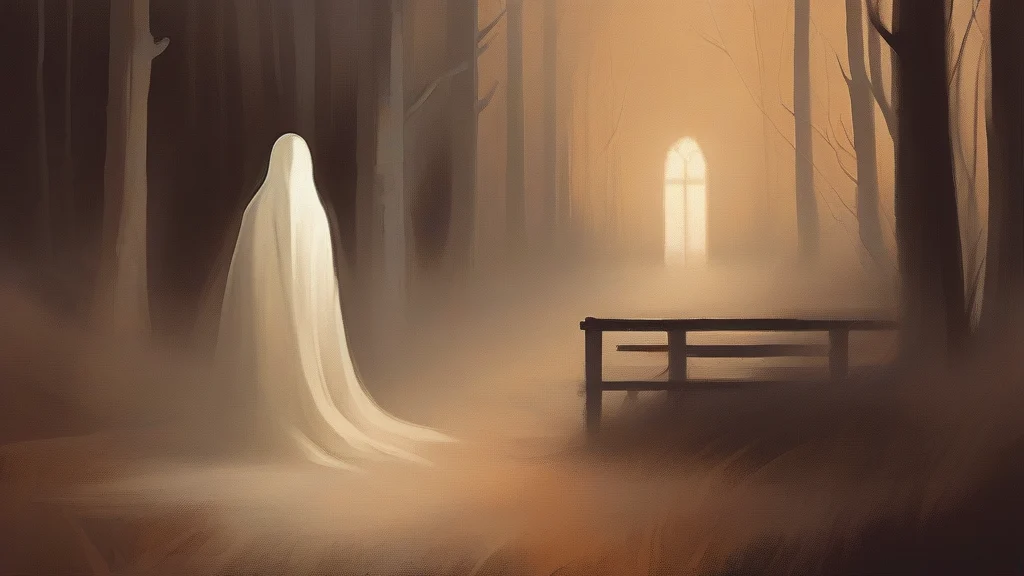
What does ghostly mean?
Ghostly is an adjective meaning like a ghost or suggestive of something supernatural. It describes appearances, sounds, presences, and atmospheres that seem pale, faint, unnatural, or frighteningly uncanny. A pale and silent figure can be ghostly, as can an empty house, a familiar voice, or an atmosphere of dread. The word often combines literal and figurative meanings: it may refer to an apparition, but more commonly it suggests a haunting, eerie, or otherworldly quality. In literary and descriptive contexts, ghostly can create a strong sense of mystery and unease. It is related in spelling and sound to ghastly, but the two words are not interchangeable: ghostly emphasizes the spectral or uncanny, while ghastly more often conveys horror or extreme ugliness. The adjective comes from ghost plus the suffix -ly and has the adverb ghostlily and the noun ghostliness.
adjectiveResembling a ghost or apparition, especially in being pale, faint, eerie, or unnaturally quiet. It can also describe anything that evokes a supernatural or uncanny atmosphere.
- Resembling a ghost or apparition, especially in appearance or manner.
- Creating an eerie, uncanny, or supernatural atmosphere.
- Very faint, pale, insubstantial, or difficult to perceive.
"A ghostly figure appeared at the end of the corridor."
"The abandoned house had a ghostly atmosphere that unsettled even the most skeptical visitors."
"She heard a ghostly voice calling her name from the other side of the room."
Ghostly is both a visual description and a mood: it can make an empty room, a pale face, or a sudden silence seem haunted without naming an actual ghost.
Reviewed by Deb Chak, Editor. AI-assisted content curated by RJS Tech Solutions LLP.
Where does ghostly come from?
Ghostly was formed in the early 16th century from ghost and the suffix -ly. Ghost descends from Old English gāst, which originally referred to a spirit or breath and later came to mean an apparition. The older variant gast and the related adjective gastly reflect the same historical family of words, although gastly later developed a distinct meaning emphasizing horror or dreadful appearance.
Related word forms
How ghostly is actually used
Ghostly is commonly figurative and literary, though it is also used in ordinary descriptive writing. It may describe a person, object, sound, presence, or atmosphere; its connotation is usually mysterious, eerie, and supernatural rather than humorous.
Easily confused with ghostly
Ghostly usually emphasizes a spectral, eerie, or uncanny quality, whereas ghastly more often describes something frightening, horrible, or shocking in appearance.