
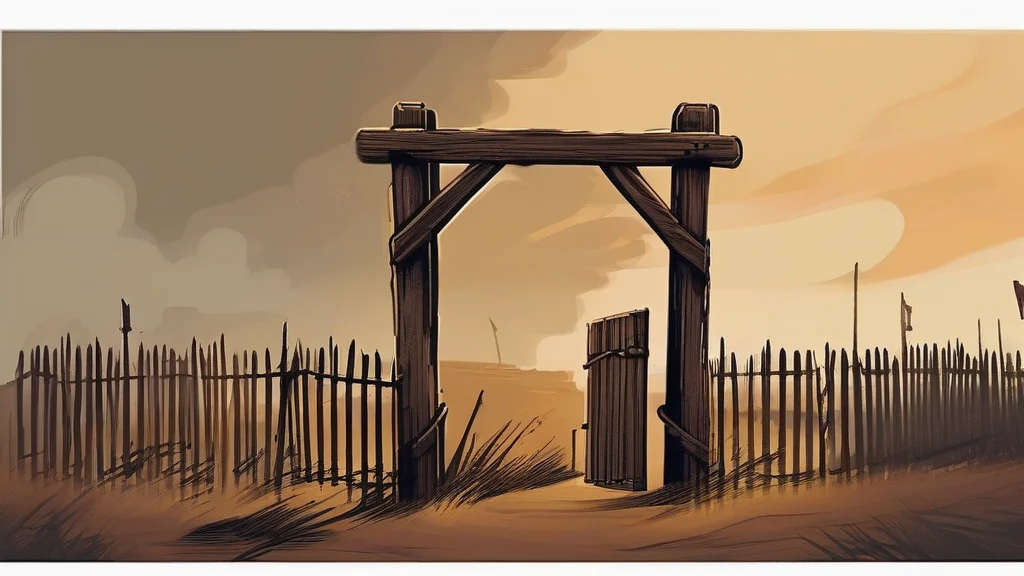
What does gibbet mean?
A gibbet is a historical post or framework used to hang a condemned person, often leaving the body exposed as a public warning. The word can also denote the displayed body itself. Unlike the broader term scaffold, which may refer to any raised platform for public activity, a gibbet specifically evokes hanging, execution, and the theatrical display of punishment. It was also used as a verb, meaning to put someone to death by hanging on such a structure, though that form now sounds archaic. In modern English, gibbet appears mainly in historical accounts, legal writing, and literary descriptions of public punishment. Although no longer an everyday term, it remains useful for understanding a distinctive and grisly instrument of judicial punishment: one that could transform an execution into prolonged, visible spectacle.
A post or framework from which a person was executed by hanging; by extension, the body displayed on such a structure.
"A crowd gathered around the gibbet as the executioner prepared to carry out the sentence."
Chiefly historical or literary. The sense denoting a displayed body is especially associated with accounts of public execution and warning.
To put a person to death by hanging on a gibbet.
"The tyrant ordered the murderer to be gibbeted before the city gates."
Archaic and chiefly found in historical or literary contexts.
The regular plural of the noun is gibbets.
"Descriptions of the punishment referred to two gibbets erected at opposite ends of the square."
A gibbet was not merely an instrument of execution: it could also become the macabre public display of the condemned person's body.
Reviewed by Deb Chak, Editor. AI-assisted content curated by RJS Tech Solutions LLP.
Where does gibbet come from?
The English word entered Middle English from Old French gibet, which was borrowed from Medieval Latin gibettum. The deeper origin of the Latin form is uncertain. Its modern English relatives include French gibet, Spanish gibete, Portuguese gibete, Catalan gibet, and Italian gibetto, all belonging to the same wider Romance vocabulary for a gallows or gibbet.
Related word forms
How gibbet is actually used
The word is chiefly historical, legal, or literary in modern English and carries connotations of public punishment, execution, and spectacle. The verb is especially archaic and appears mainly in historical narratives.
Easily confused with gibbet
A giblet is a piece of meat or offal, whereas a gibbet is a historical execution device.
A gibbon is a type of ape, while a gibbet is a post or framework used for hanging and public display.