
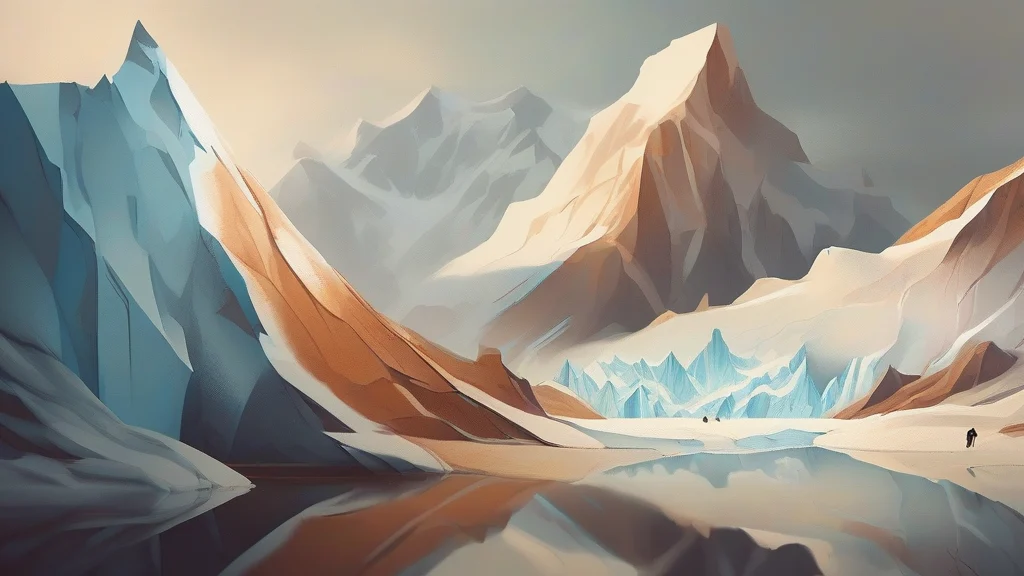
What does glaciating mean?
“Glaciating” means covering with ice, turning into ice, or undergoing the process of becoming covered by glacial ice. It is the present participle of “glaciate” and is used particularly in geology, geography, and climate science. In active constructions, it can describe ice actively covering or transforming a landscape: “The glacier is glaciating the valley.” In descriptive or attributive contexts, it may refer to land or processes affected by ice over long periods. The word evokes the gradual, powerful work of glaciers, which can cover terrain, alter drainage systems, erode rock, and preserve evidence of earlier climates. Although usually discussed in technical writing, it is not restricted to specialist usage and can appear in accessible descriptions of landscapes, ice ages, and environmental change.
To cover with ice, turn into ice, or become covered by glacial ice.
"The expanding ice sheet is glaciating the northern plain."
The active and passive participial uses are both possible, depending on whether the subject is doing the covering or is itself being covered.
Covered with or undergoing the process of being covered by ice.
"Researchers studied the glaciating landscape for evidence of ancient climate change."
This is a participial adjective formed from “glaciate,” especially common in descriptive scientific writing.
The transformation that can carve valleys and sculpt continents begins with a simple idea: ice taking over.
Reviewed by Deb Chak, Editor. AI-assisted content curated by RJS Tech Solutions LLP.
Where does glaciating come from?
The word comes from English “glaciate,” which was borrowed from Latin “glaciāre,” a verb derived from “glaciēs,” meaning “ice.” The related forms “glacier,” “glacial,” and “glaciology” belong to the same Latin root and entered English through French or other European languages. “Glaciating” developed as the present participle of this inherited verb and is now used especially in scientific descriptions of ice-related geological processes.
Related word forms
How glaciating is actually used
Chiefly used in formal or scientific contexts, especially in geology, glaciology, climatology, and related earth sciences. It is normally the present participle of “glaciate” and can also function attributively before a noun.
Easily confused with glaciating
“Glaciating” describes the active process of ice formation or coverage, whereas “glaciated” describes something already covered or transformed by glacial ice.