
What does glacier mean?
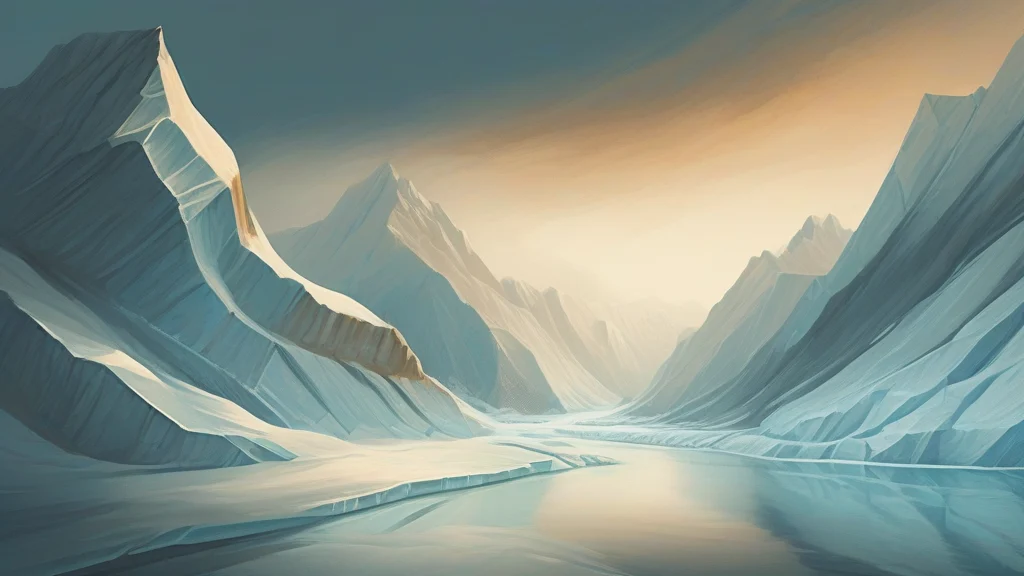
A glacier is a large, enduring mass of ice that moves slowly across the land under the influence of gravity. Unlike a frozen lake, a glacier flows, although its motion is usually too slow to notice; ice at its upper end may melt and be replenished by snowfall, while ice at its lower end melts or breaks off. Glaciers are commonly found in high mountain ranges and polar regions, and their movement can carve and shape rock. The word is used mainly in geography, geology, climatology, and environmental reporting, where expressions such as “glacier retreat” and “glacier melt” refer to changes in their size or behavior. Although a glacier may appear static, it is dynamic: ice deforms, cracks, flows, and transports sediment. This makes glaciers important indicators of long-term climate patterns and striking reminders that landscapes change over geological time. In figurative use, “glacier” can suggest slow, irresistible movement, but that sense is much less common than the physical one.
nounA glacier is a large, long-lasting mass of ice that moves slowly over land under the influence of gravity. Glaciers commonly occupy valleys, high mountain ranges, and polar icefields.
- A large, enduring mass of ice that moves slowly over land under gravity.
"The expedition crossed a vast glacier while the sun reflected from its deeply crevassed surface."
"The trail follows the edge of a glacier winding between steep black peaks."
"Scientists are monitoring the glacier to document its retreat and the effects of warming."
The standard plural is glaciers.
"Several glaciers feed the river during the summer melt season."
A glacier is a river of ice: it flows, grinds valleys, and can reshape the landscape one imperceptible inch at a time.
Reviewed by Deb Chak, Editor. AI-assisted content curated by RJS Tech Solutions LLP.
Where does glacier come from?
The English word comes from French glacier, derived from glace, meaning “ice,” which ultimately comes from Latin glacies, “ice.” The same Latin root is reflected in English words such as glacial, glaciated, glaciology, and glaciologist. The term became established in English for a mass of ice that flows slowly over the land.
Related word forms
How glacier is actually used
The term is standard in geography, geology, climatology, and environmental science. In figurative use, it can describe something that moves slowly but with great force or persistence, though this usage is less common.
Easily confused with glacier
A glacier is a moving mass of ice, while glacial is an adjective relating to glaciers or to the cold conditions associated with them.