
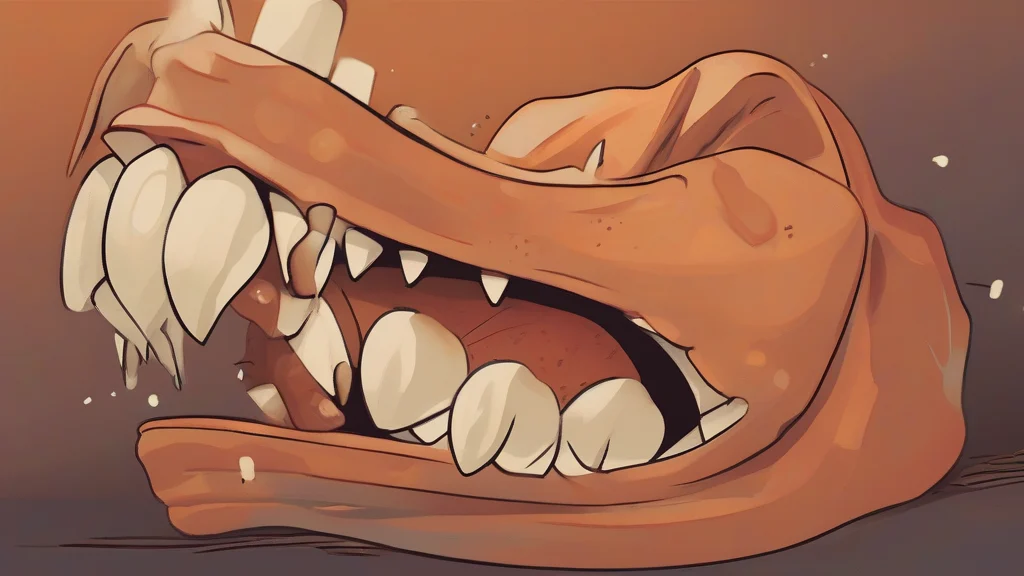
What does gnaw mean?
Gnaw is a transitive or intransitive verb meaning to bite or chew at something persistently. Its literal use evokes an animal working at a hard object with its teeth: beavers gnaw branches, rodents gnaw through wood, and dogs may gnaw a toy. The verb also has a well-established figurative sense, meaning to cause or experience a persistent, uncomfortable feeling such as hunger, doubt, anxiety, or regret. “Worry gnawed at him” and similar expressions convey not a sudden disturbance but an ongoing, wearing pressure. In figurative writing, gnaw is often literary and emotional, though it remains ordinary in everyday description. The related gerund “gnawing” can intensify the idea: a gnawing doubt suggests discomfort that returns and refuses to disappear. Gnaw is therefore useful when an action or feeling should be portrayed as persistent rather than momentary, whether the cause is physical appetite, anxious thought, or emotional regret.
verbTo bite or chew at something persistently with the teeth. Figuratively, it means to cause or experience a persistent feeling of anxiety, hunger, doubt, or discomfort.
- To bite, chew, or wear away at something persistently with the teeth.
- To cause or experience a persistent, uncomfortable feeling such as anxiety, hunger, doubt, or regret.
"Old worries continued to gnaw at her long after she had left the city."
"Beavers can gnaw through tree trunks and other vegetation."
"Doubt continued to gnaw at him as the deadline approached."
With a single word, gnaw links the physical bite of teeth to the figurative bite of doubt.
Reviewed by Deb Chak, Editor. AI-assisted content curated by RJS Tech Solutions LLP.
Where does gnaw come from?
The modern English verb developed from Old English gnagan, which was inherited from Proto-Germanic *gnaganą, meaning “to bite or gnaw.” It has close cognates in German nagen, Dutch gnagen, and Old Norse gnaga. In English, the word extended from physical biting and chewing to figurative experiences such as persistent worry, hunger, or regret.
Related word forms
How gnaw is actually used
The literal sense is neutral and commonly describes animals chewing persistently. The figurative sense is especially common in emotional or literary contexts and suggests discomfort that endures rather than a brief disturbance.