
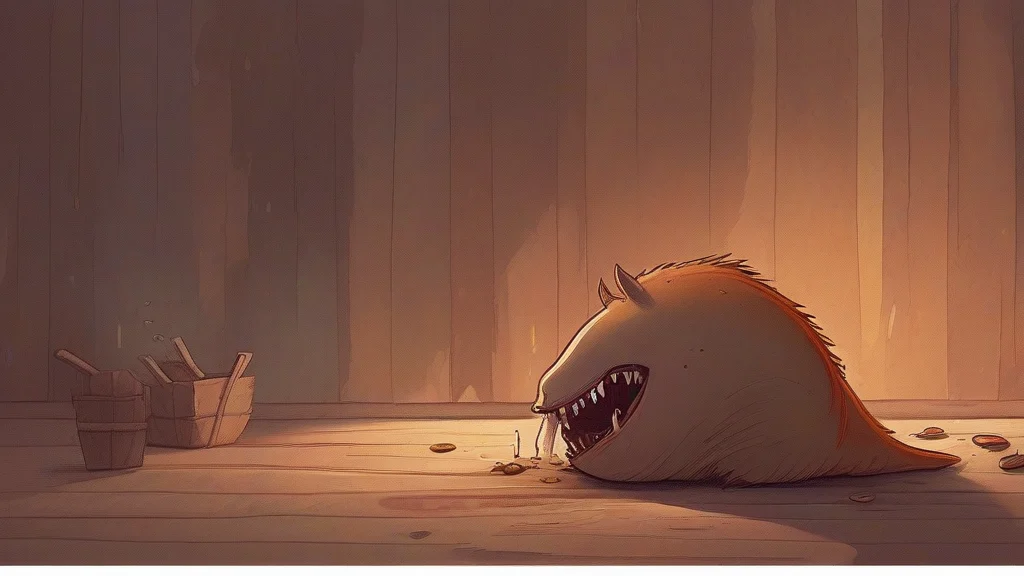
What does gnawing mean?
Gnawing describes a discomfort that persists and refuses to fade. Its central adjectival use is figurative: a gnawing ache, a gnawing hunger, or gnawing doubt conveys an unpleasant sensation that returns or continues in the background. The word can also appear as the present participle of “gnaw,” meaning to bite repeatedly or, figuratively, to worry persistently. Its force comes from the physical image of chewing, as though the discomfort were eating away at the person. In literary and everyday prose, “gnawing” adds an emotional dimension, suggesting anxiety, dissatisfaction, or longing that cannot be put aside. Although often linked with pain or hunger, it is especially effective for doubts and worries. In these contexts, “gnawing” conveys both steadiness and severity, making it useful for describing discomfort that quietly dominates attention.
Describing a persistent, painful, or uneasy sensation, especially physical pain, hunger, doubt, or anxiety that continually returns or remains in the background.
"A gnawing uncertainty about the diagnosis kept her awake."
This is the most characteristic modern use. It is especially effective for sensations that continue quietly despite attempts to ignore them.
The present participle of “gnaw”: biting or chewing repeatedly with the teeth, or figuratively worrying persistently.
"He was gnawing at the problem, unable to leave it alone."
The literal sense is relatively uncommon; figurative use with “at” often suggests prolonged worry or mental discomfort.
From the teeth to the mind: gnawing turns a simple bite into a metaphor for discomfort that will not let go.
Reviewed by Deb Chak, Editor. AI-assisted content curated by RJS Tech Solutions LLP.
Where does gnawing come from?
English “gnaw” descends from Middle English “gnawen” and Old English “gnagan,” both meaning “to bite or chew.” The Old English word was related to cognates such as Old Norse “gnaga” and modern Dutch “gnagen,” and is commonly connected with a Proto-Indo-European root meaning roughly “to gnaw or scrape.” The form “gnawing” is the English present participle and is also used adjectivally for a persistent gnawing sensation.
How gnawing is actually used
The adjective is more literary and emotionally charged than a general term such as “persistent” or “continuous.” Literal use as a verb is uncommon compared with figurative use for persistent worry or unease.
Easily confused with gnawing
Nagging usually describes repeated irritation, demands, or a persistent complaint, whereas gnawing describes a deep, painful, or uneasy sensation.