
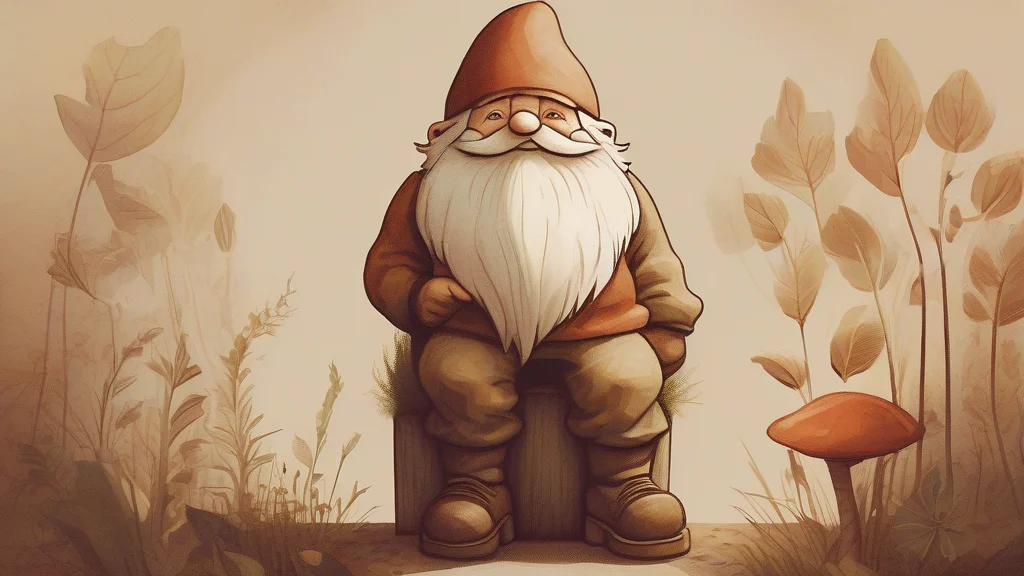
What does gnome mean?
A gnome is a small mythical being traditionally associated with the earth, often imagined as an elderly, bearded man in a pointed hat who lives underground or in a garden. Its most familiar modern form is the garden gnome, a decorative figure placed among flowers, shrubs, or lawn ornaments. Gnomes also feature prominently in European folklore and fantasy, where they may guard gardens, craft objects, live underground, or interact with people. Earlier alchemical writings used the term for an elemental spirit of the earth, and an older dictionary sense treated a gnome as a diminutive person, although that usage is now dated. The word entered English through learned and occult traditions from Greek γνώμη, meaning “knowledge,” “opinion,” or “maxim,” before the small, familiar garden figure became dominant. Today, “gnome” is usually neutral and even whimsical, but context determines whether it denotes a folklore creature, a garden statue, a fantasy character, or the outdated word for a very small person.
nounA small, usually male mythical being associated with the earth, traditionally portrayed as a bearded, pointy-hatted figure and now especially familiar as a garden ornament.
- A small mythical creature, traditionally male, that lives in or beneath the earth and is often represented as a bearded figure wearing a pointed hat.
- In alchemical and occult traditions, an elemental spirit associated with the earth.
- A small or diminutive person; this sense is now dated and may sound patronizing.
"A weathered gnome stood among the tomato plants, looking more surprised than the gardener did."
"The children dressed as garden gnomes for the school parade."
"An old illustration depicts a gnome emerging from the soil with a lantern."
The standard plural is formed by adding -s.
"Several colorful gnomes stood along the garden path."
Gnome did not begin as a garden statue: in older alchemical writing it named an earth spirit, before folklore made the little fellow a lawn ornament.
Reviewed by Deb Chak, Editor. AI-assisted content curated by RJS Tech Solutions LLP.
Where does gnome come from?
The word entered English in the 16th century through French and Latin, ultimately deriving from Greek γνώμη, “knowledge,” “opinion,” or “maxim.” Early uses connected gnomes with intelligence and with elemental beings in alchemical and occult thought. Over time, folklore and literature established the now-familiar small, bearded, pointy-hatted figure, especially as a garden ornament.
Related word forms
How gnome is actually used
The word is neutral in ordinary reference to a mythical creature or garden figurine. The older sense “a small or diminutive person” is dated and can be insulting when applied to an actual person.
Easily confused with gnome
Nome is an archaic or Scots form of the word “name,” whereas a gnome is a mythical being associated with the earth.