
What does gnu mean?
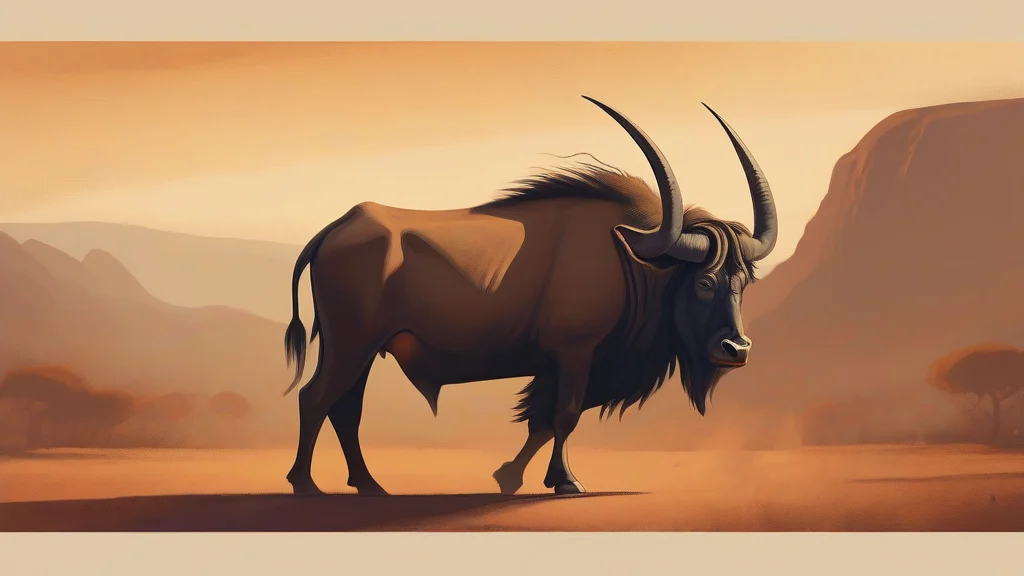
A gnu is a large, gregarious antelope native to eastern and southern Africa. The name is used for the two species of the genus Connochaetes, the blue wildebeest and black wildebeest. Both sexes carry curved horns, and the animals are known for their sloping backs, long faces, and dark coats. Unlike many antelope, gnu make substantial seasonal migrations and may gather in herds numbering in the thousands. They graze on grasses and shrubs, and their movements have made them a prominent feature of African savannas, migrations, and wildlife viewing. In English, gnu is especially familiar in southern Africa and British usage, whereas the alternative common name is more widespread in North America. For readers who know the animal mainly as a wildebeest, gnu offers a compact, distinctive name and evokes both its unmistakable appearance and the enormous herds that make migrations such a dramatic sight.
nounA large, gregarious antelope native to eastern and southern Africa. The gnu includes the blue and black wildebeest and is characterized by curved horns, a sloping back, and a long, bearded face.
- A large antelope of the genus Connochaetes, native to eastern and southern Africa and commonly associated with the name wildebeest.
"A herd of gnus crossed the open plain as the sun began to rise."
"Tourists watched a vast gnu migration from the ridge at sunset."
"The gnu lowered its head and began grazing on the short grass."
The standard plural is gnus, as in “a herd of gnus.” The alternative plural wildebeest is also common.
"Thousands of gnus moved across the grassland."
A gnu's sloping back and thundering migration have made it one of Africa's most recognizable animals.
Reviewed by Deb Chak, Editor. AI-assisted content curated by RJS Tech Solutions LLP.
Etymology of gnu
English borrowed the word from the Khoekhoe language, in which the form gũ denotes the animal and is commonly interpreted as meaning “wild ox.” The name entered European usage through southern African English and Dutch, where it became established for the antelope now also widely called the wildebeest.
How gnu is actually used
The term is especially familiar in southern Africa and British English, while the alternative common name is more widespread in North America. It is standard vocabulary in wildlife, conservation, and travel contexts.
Easily confused with gnu
Gnu and wildebeest can refer to the same animals, but gnu may be used more specifically for the genus Connochaetes, whose species include the blue wildebeest and black wildebeest.