
What does goat mean?
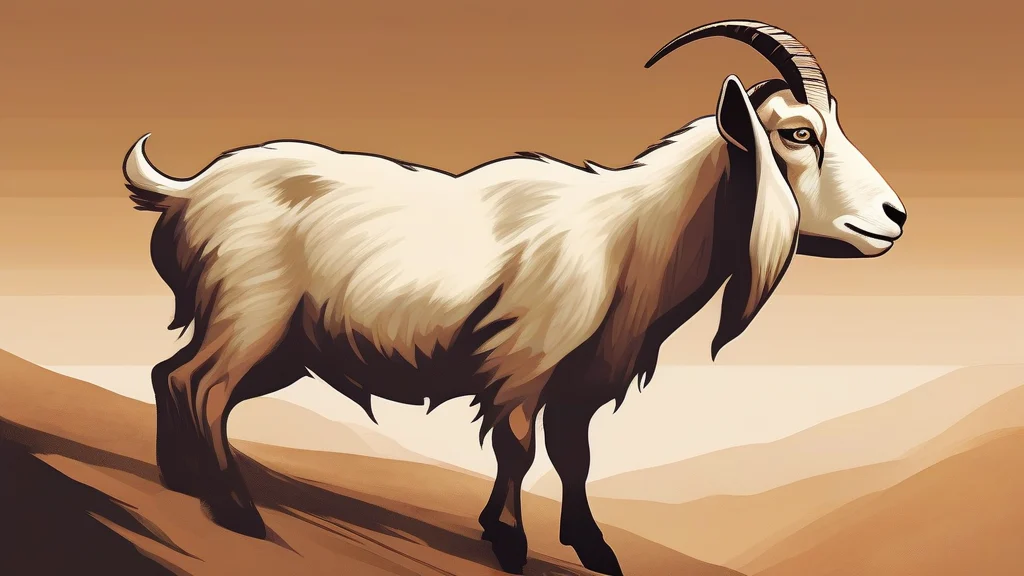
Goat is the ordinary English name for a horned, bearded, cloven-hoofed mammal kept for milk, meat, leather, and hair, as well as a familiar animal in farm, mountain, and rural settings. The word also has strongly figurative meanings. A person who is blamed for the mistakes or misfortunes of others may be called a scapegoat, while, more casually, an irritating or incompetent person may be called a goat. These uses reflect the word's long-standing association with animals selected to carry burdens or absorb blame. As a verb, “goat” means to irritate or provoke someone and can also mean, in informal usage, to fail or go badly. The word is recognisable across British and American English, although the vowel sound differs: /ɡəʊt/ is typical in British English and /ɡoʊt/ in American English. Goat is useful because it combines a concrete animal term with established social and emotional meanings, ranging from livestock and rural life to criticism, blame, and irritation.
A domesticated or wild caprine mammal with a short coat, beard, and cloven hooves; by extension, a person blamed for others' faults or, informally, a contemptible or incompetent person.
"They painted the old wooden goat for the schoolyard."
The figurative noun can be derogatory, especially when used to describe a person as incompetent or contemptible.
To irritate or provoke someone; informally, to fail or go wrong, especially in an attempted performance or undertaking.
"The noise from the next room began to goat me."
The verb is informal, particularly in the sense of failing or going wrong.
The regular plural of goat is goats.
"A herd of goats grazed on the hillside."
A goat can be both a source of milk and a historical dumping ground for blame—the word “scapegoat” still carries the animal's ancient symbolism.
Reviewed by Deb Chak, Editor. AI-assisted content curated by RJS Tech Solutions LLP.
Where does goat come from?
The English word descends from Old English gāt and is inherited from Proto-Germanic *gaitaz. Modern cognates include Dutch geit and German Geiß. The figurative sense of a person blamed for others' faults developed through the longstanding idea of a scapegoat, an animal symbolically made to bear the sins or penalties of others.
Related word forms
How goat is actually used
The word is neutral when referring to the animal. Its figurative uses are often dismissive or insulting, while “get one's goat” is an informal expression meaning to irritate someone. British and American pronunciation differ: British English generally uses /ɡəʊt/, while American English generally uses /ɡoʊt/.