
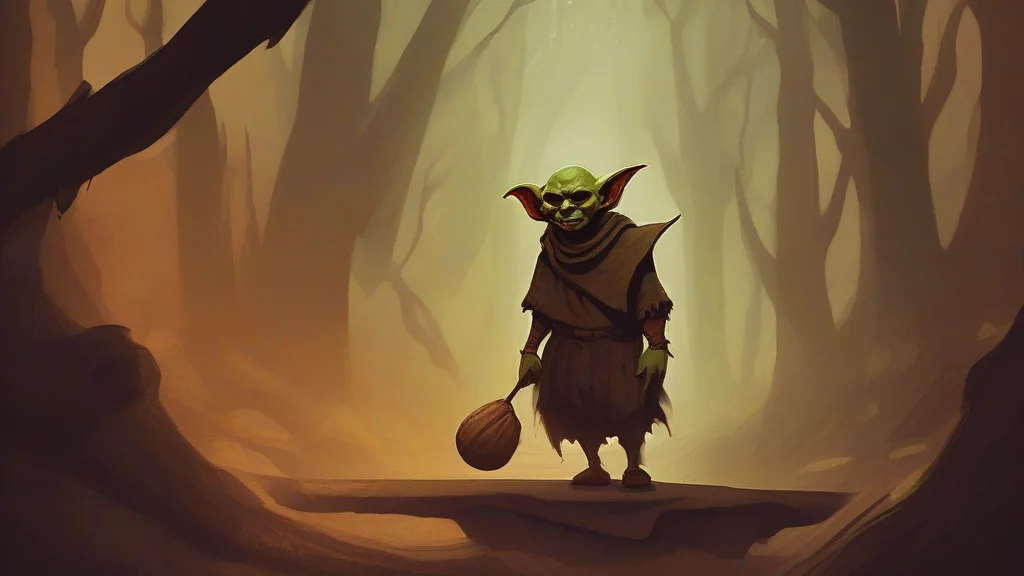
What does goblin mean?
A goblin is a small, grotesque or ugly-looking creature from folklore, usually portrayed as mischievous, sinister, or capable of playing cruel tricks on human beings. Goblins commonly inhabit dark forests, caves, ruins, and other remote places, and they appear in medieval legend, later folklore, modern fantasy literature, games, and films. The word can also be used figuratively for a person considered nasty or troublesome, although this usage is relatively uncommon. Its long history in English comes through medieval French and Latin forms, while its ultimate origin remains uncertain. In Shakespeare’s The Merry Wives of Windsor, the household spirit Robin Goodfellow is called “the goblin,” linking the word with a particularly memorable character in English literature. Today, “goblin” remains especially useful when discussing traditional folklore and fantasy traditions, where creatures such as goblins often serve malicious or comic antagonists.
nounA mischievous or malevolent supernatural creature of folklore, typically imagined as small, grotesque, and ugly-looking. Figuratively, the term can describe a nasty or mischievous person.
- A small, grotesque, usually mischievous supernatural creature in folklore and fantasy.
- A person regarded as nasty, malicious, or mischievous.
"A goblin slipped through the hedge and stole the farmer's lantern."
"The goblin laughed at the traveller's confusion and vanished into the shadows."
"His cruel behaviour in the office led his colleagues to regard him as a goblin."
The regular plural is goblins, used for multiple creatures or, figuratively, for multiple people described as goblins.
"The goblins emerged from the hollow tree one by one."
Shakespeare brought the term into English drama by calling Robin Goodfellow, the mischievous household spirit in The Merry Wives of Windsor, “the goblin.”
Reviewed by Deb Chak, Editor. AI-assisted content curated by RJS Tech Solutions LLP.
Where does goblin come from?
The English word entered Middle English in forms such as gobelin, through medieval French and Latin usage. Medieval Latin gobelinus supplies an important intermediate form, but the ultimate origin of the word is uncertain; one later popular theory connected it with the medieval Gobelin family. English subsequently developed the standard form goblin, which became prominent in folklore and literature.
Related word forms
How goblin is actually used
The word is neutral to literary or fantastical in its principal sense. Its figurative use is derogatory and is much less common than its folklore and fantasy meanings.
Easily confused with goblin
A goblin is a folklore creature, whereas a goblet is a drinking vessel or cup.