
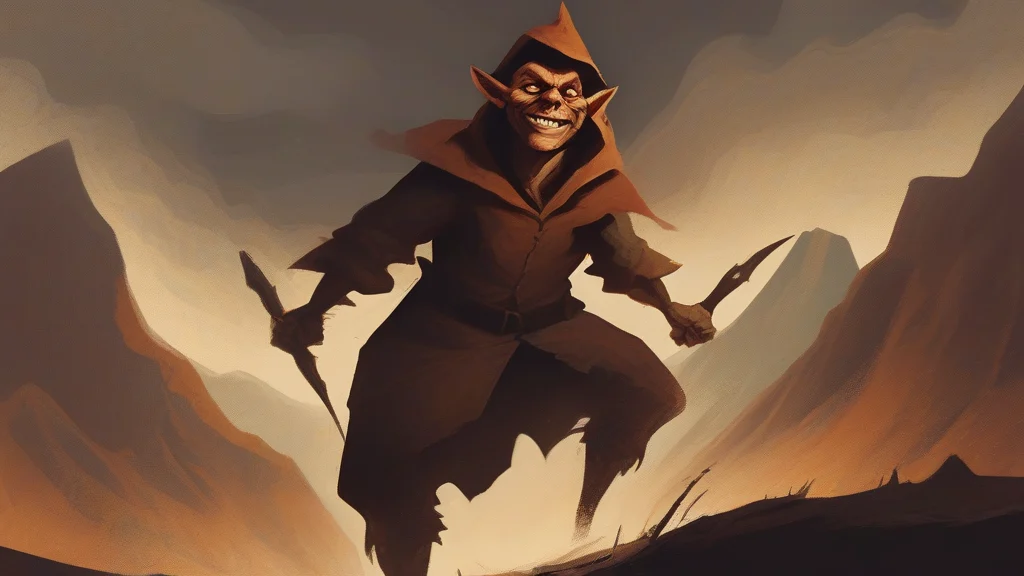
What does hobgoblin mean?
A hobgoblin is a goblin-like creature from folklore or, more commonly today, an imaginary danger that is used to frighten someone. The word often appears in expressions such as “a hobgoblin in the mind,” suggesting a fear or worry that has grown larger or more formidable than it really is. It can also describe a persistently troublesome person, usually with a humorous or affectionate tone rather than a seriously hostile one. Historically, hobgoblins were associated with households and could be either helpful spirits or troublesome little creatures. The modern word therefore combines an old supernatural being with the broader idea of a bogey or bogeyman. Although it occurs in both British and American English, it often sounds more traditional or literary than the plainer words “goblin,” “bogey,” and “bugbear.”
nounA mischievous or malevolent goblin in folklore; by extension, an imaginary threat used to frighten someone or a persistently troublesome person.
- An imagined frightening threat or bogey.
- A mischievous or malevolent goblin in folklore.
- A troublesome, annoying person or thing.
- Historically, a benevolent or mischievous household spirit.
"The old cottage was said to be haunted by a mischievous hobgoblin who tidied the kitchen at night."
"The prospect of a long examination had become a hobgoblin in her mind."
"He laughed and brushed aside the idea that a sudden failure could turn into a hobgoblin."
Used when referring to multiple goblins, imagined threats, or troublesome people or things.
"Stories about mischievous hobgoblins frightened the children long before the lights went out."
Once regarded as a helpful household sprite, the hobgoblin became a familiar bogey whose mischief usually appears just before bedtime.
Reviewed by Deb Chak, Editor. AI-assisted content curated by RJS Tech Solutions LLP.
Where does hobgoblin come from?
The word dates from the late 16th century and is generally understood as a combination of “Hob,” a familiar form of the name Robert, with “goblin.” It originally referred to a household spirit, sometimes helpful but also capable of mischief, and developed the modern figurative sense of an imagined threat or persistent source of fear. The name element links it to other familiar forms of Robert, including Robin and Rob.
How hobgoblin is actually used
The word is now usually figurative and carries a mildly playful or dismissive tone. It can sound old-fashioned when used literally for a folklore creature, but remains natural in expressions concerning an exaggerated fear or persistent worry.
Easily confused with hobgoblin
A goblin is a general folklore creature, whereas a hobgoblin is specifically a household spirit or a mischievous figure used to frighten people.
A bogey is primarily an imagined frightening threat, while a hobgoblin is also a goblin-like creature in folklore.