
What does robin mean?
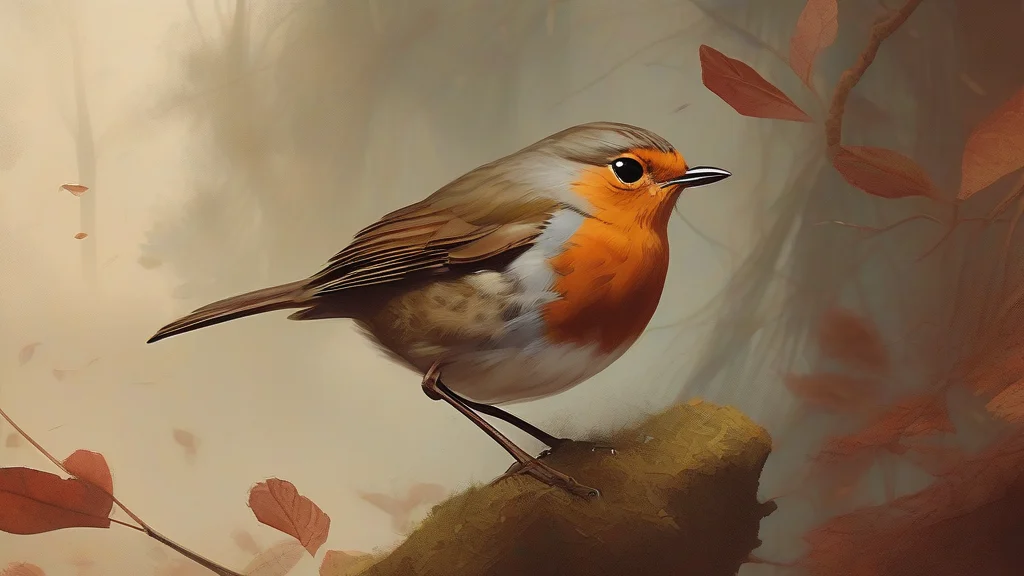
A robin is a small, familiar songbird, and the word names different birds depending on where you are. In Britain and much of Europe it means the European robin, a plump bird with an orange-red face and breast that is bold around people and often follows gardeners to catch disturbed insects and worms. In North America it means the American robin, a considerably larger thrush with a grey-brown back and a brick-red breast, whose song is among the first signs of spring. The two species are not closely related, though the shared name reflects early settlers' habit of naming new birds after familiar ones. Elsewhere, such as in Australia, various other small birds are also called robins. The word carries warm, domestic connotations of gardens, winter and Christmas cards. It also appears in fixed expressions like robin redbreast and robin's egg blue, a pale greenish-blue named for the colour of the American robin's eggs. Its familiarity makes it a useful reference point in everyday description.
nounA small songbird, especially the European robin (Erithacus rubecula) with its orange-red face and breast, or the larger North American robin (Turdus migratorius), a thrush with a brick-red breast.
- The European robin, a small Old World songbird with an orange-red face and breast, long associated with gardens and winter.
- The American robin, a large North American thrush with a grey-brown back and a brick-red breast.
- Any of various other small birds, such as the robins of Australia, that resemble or are named after these birds.
"A robin perched on the handle of the spade, watching the freshly turned soil for worms."
"The robin sang from the top of the hedge long after the other birds had gone quiet."
"By late March, the first American robins were hopping across the lawn, pulling earthworms from the thawing ground."
Regular plural, formed by adding -s.
"Several robins were feeding on the lawn after the rain."
The American robin is not the European robin at all: homesick English colonists named the unrelated North American thrush after the familiar bird because its breast was similarly red.
Reviewed by Deb Chak, Editor. AI-assisted content curated by RJS Tech Solutions LLP.
Where does robin come from?
The bird name comes from Robin, a pet form of the personal name Robert, which reached English from Old French and is of Germanic origin. The bird was first called robin redbreast, and the shorter form later became standard, following a common English habit of giving familiar birds personal names, as with jenny wren and jackdaw. The name was later carried to North America, where it was applied to an unrelated thrush.
How robin is actually used
The word is neutral and common in everyday and literary English. Its meaning depends on region: in Britain and Europe it usually means the European robin, while in North America it means the American robin. In British culture the robin is strongly tied to Christmas imagery and to winter. The word is also a familiar given name.
Easily confused with robin
A wren is a different, smaller bird that is mostly brown with a short, often upright tail, whereas a robin is known for its red or orange breast.