
What does gonfanon mean?
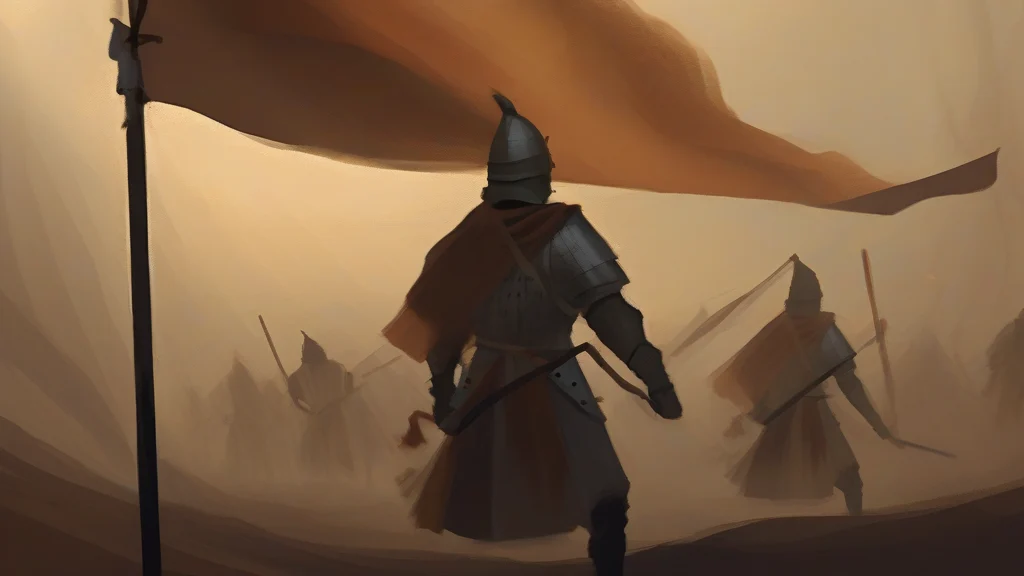
A gonfanon is a formal flag or banner, especially one associated with a procession, guild, military company, or ruler. In historical and literary contexts, it is typically a long piece of fabric hung from a pole and may bear a religious emblem, heraldic device, or the insignia of an organization. The word is chiefly historical and ceremonial today rather than part of ordinary English, but it survives in descriptions of medieval ceremonies, processions, and martial pageantry. In modern writing, especially historical or fantasy fiction, “gonfanon” lends an old-world formality and may suggest a standard carried before a procession. A gonfanon should not simply be confused with every flag: the traditional sense is a distinctive processional or organizational banner. It also appears in the closely related spelling “gonfalon.” Although uncommon, the word is useful when precision matters because it identifies a specific kind of historic standard rather than any banner in general.
nounA formal flag or banner, especially one used in a procession or bearing the insignia of a guild, military company, or other organization.
- A ceremonial or organizational banner, especially one carried in a procession or displaying the insignia of a guild, military company, ruler, or religious body.
"The guild's gonfanon was carried at the head of the procession."
"The marshal unfurled the royal gonfanon before the assembled companies."
"The museum displayed a tattered gonfanon carried during a medieval procession."
The regular plural adds -s; because the word is uncommon, plural usage is now chiefly found in historical or literary contexts.
"The herald displayed three gonfanons representing the city's guilds."
A gonfanon was once a working battle standard; today it survives as a symbol of pageantry, guilds, and historic ceremony.
Reviewed by Deb Chak, Editor. AI-assisted content curated by RJS Tech Solutions LLP.
Where does gonfanon come from?
The English word was borrowed from Old French gonfanon by the early 17th century. Old French gonfanon came through Medieval Latin gonfanum, which is probably derived from a Greek term for a banner, although the ultimate Greek etymology is uncertain. Gonfalon, gunfanon, and gunfalon are established historical variants of the English word.
How gonfanon is actually used
This is a learned, archaic, and chiefly literary term. Outside historical descriptions and ceremonial contexts, ordinary speakers would normally use banner, standard, or flag.
Easily confused with gonfanon
Gonfalon is an established variant spelling of gonfanon and denotes the same kind of formal flag or banner.