
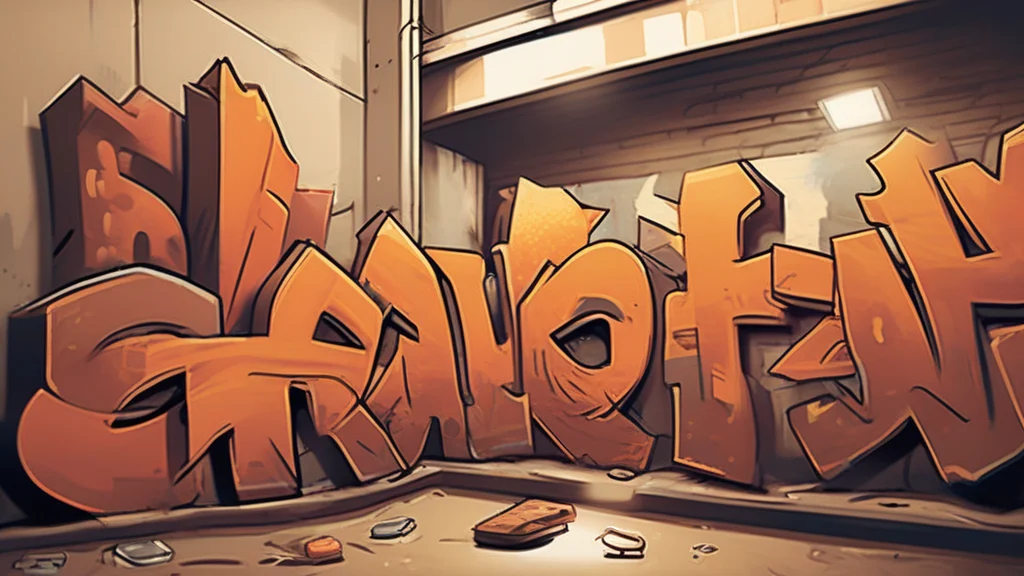
What does graffiting mean?
Graffiting is the activity of writing graffiti—names, slogans, symbols, or designs on walls, buildings, bridges, and other surfaces. It is usually associated with unauthorized public marking, so the word often has a mildly disapproving or legal undertone, although people also use it neutrally for graffiti-making as an art form. In a sentence, graffiting can name the activity, as in “preventing graffiting in transit stations,” or show an action in progress, as in “he was caught graffiting a wall.” The term is a less common spelling of graffitiing, especially in British English. It is an English -ing formation built from graffiti, a loanword from Italian. The distinction is straightforward: graffiti names the writing or images, while graffiting names the act of producing them. The word is useful because it identifies the behavior without treating the artwork itself as the grammatical subject, and it connects modern street culture with a long history of people inscribing names and messages on public surfaces.
The activity or practice of writing graffiti, especially on walls and other public surfaces.
"The council introduced CCTV and lighting to discourage graffiting in the town centre."
Normally treated as an uncountable noun and often associated with unauthorized marking.
To write graffiti, especially on walls or other public surfaces.
"Several teenagers were caught graffiting the pedestrian underpass."
This is the present participle of graffiti; graffiting is a less common spelling variant of graffitiing.
The activity is referred to in the singular, and plural forms such as graffitings are not standard.
"Graffiting was treated as a serious nuisance around the railway station."
Graffiti names the marks; graffiting names the act—and often the social controversy.
Reviewed by Deb Chak, Editor. AI-assisted content curated by RJS Tech Solutions LLP.
Where does graffiting come from?
Graffiting is an English formation based on graffiti, which was borrowed from Italian graffiti, the plural of graffito, meaning a scratching or inscribed mark. The Italian verb graffiare, meaning “to scratch,” ultimately derives from the Greek graphein, meaning “to write.” English formed graffiting with the -ing suffix; its single-t spelling is a recognized variant of the more common graffitiing.
How graffiting is actually used
The term is informal to neutral and often implies unauthorized marking or legal concern, although it can also be used neutrally or approvingly for public or commissioned art. It is a less common spelling of the standard form graffitiing.
Easily confused with graffiting
Graffiti refers to the writing or images themselves, whereas graffiting refers to the act of creating them.