
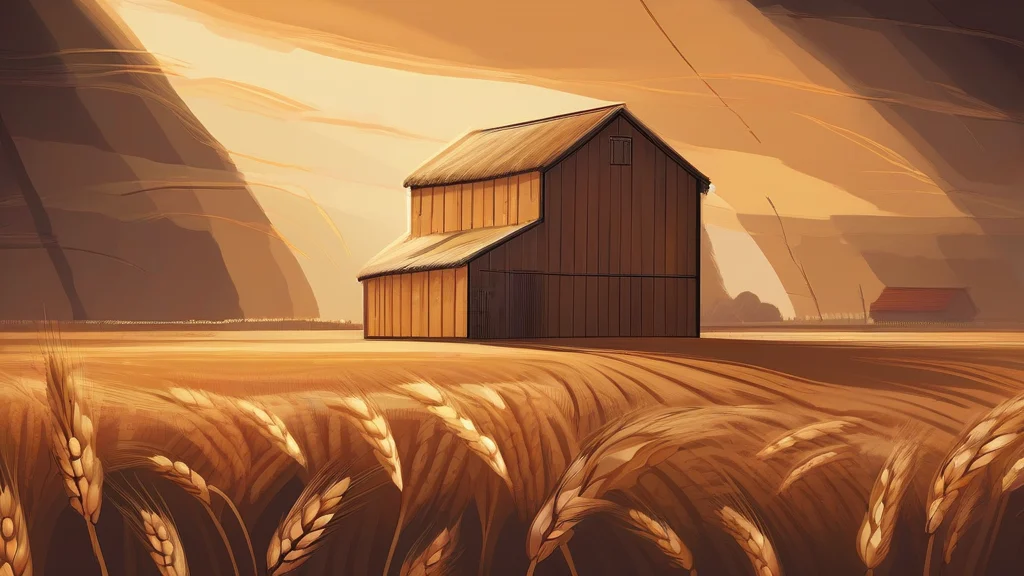
What does granary mean?
A granary is a building or room used to store grain, especially a substantial structure for keeping harvested crops. Figuratively, a granary is a rich source or repository, as in a “granary of knowledge”; this extension is literary and less common than the literal sense. Modern usage is found in both British and American English, although the word may sound especially traditional or regional in English, while cognates retain similar forms in other languages. Historically, granaries were important civic infrastructure because storing surplus grain protected communities from shortage and made food available between harvests. They often stood near mills, markets, waterways, or fortified centers. The word comes from Latin granarium, a storehouse for grain, ultimately from granum, “grain.” Related English words include grain, granular, granule, and granulate. Today, granary remains useful because it names both a practical agricultural building and a vivid metaphor for accumulated abundance, though it is more specific than the broad terms warehouse, silo, or barn.
nounA building or room used for storing grain, especially a large building intended to keep harvested crops. Figuratively, it can mean a rich source or repository of something valuable, such as knowledge or resources.
- A building or room in which grain is stored, especially harvested grain kept in bulk.
- A place or source of abundant resources, such as food, wealth, or knowledge.
"The village granary played an important role in protecting the community's grain supply."
"The old granary beside the mill has been converted into a local museum."
"The archive became a granary of information for future researchers."
The standard plural is granaries, with the stress on the first syllable.
"Several old granaries stand beside the river."
Before refrigeration, a granary was a community's shield against hunger: one carefully stored harvest could outlast a failed season.
Reviewed by Deb Chak, Editor. AI-assisted content curated by RJS Tech Solutions LLP.
Where does granary come from?
The English word granary comes from Latin granarium, meaning “a storehouse for grain,” which was derived from granum, the Latin word for grain. English has long used the term for both purpose-built grain stores and, more figuratively, repositories of valuable resources. The same Latin root is reflected in English words such as grain, granule, granular, and granulate.
How granary is actually used
The literal sense is established in both British and American English, though the word can sound traditional or especially British in contemporary use. The figurative sense is literary and less common.
Easily confused with granary
A granary is a place where grain is stored, whereas a grainery is a building or shop where grain is sold or handled.