
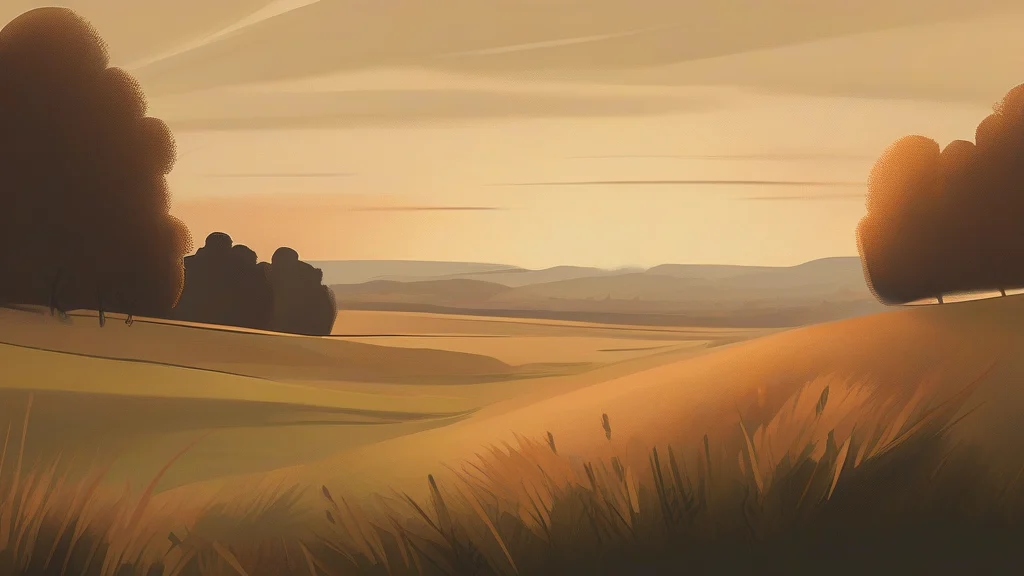
What does grassier mean?
Grassier is the comparative form of the adjective grassy, meaning “more grassy.” It is most naturally used when comparing areas of vegetation such as lawns, fields, meadows, or parks: a rain-soaked meadow may look grassier than a dry hillside. Because healthy grass is green, the word can also describe a stronger green color or a more verdant appearance, although “greener” is often clearer in those contexts. Grammatically, grassier behaves like an ordinary comparative adjective and is usually followed by “than.” Its use is literal rather than slangy, and it is equally understandable in British and American English. The word belongs to an English family built on grass, including grass, grassland, graze, grassy, and the adverb grassily. Grassier makes a precise visual comparison in a single word, while “more grassy” remains equally grammatical and can sound slightly more explicit in formal prose.
adjectiveThe comparative of grassy: having more grass, or appearing more green and verdant.
- Having more grass or grass cover.
- Appearing more green or verdant.
"After the rain, the meadow looked grassier than it had the week before."
"The wetter field was noticeably grassier than the slope beyond it."
"Her garden had become grassier, although she preferred the crisp lines of a carefully mown lawn."
Ask two lawns which one is grassier, and the comparison practically grows on you.
Reviewed by Deb Chak, Editor. AI-assisted content curated by RJS Tech Solutions LLP.
Etymology of grassier
The underlying noun grass comes from Old English græs, meaning “grass,” and is cognate with Dutch gras and German Gras. The adjective grassy was formed from that noun, and grassier is the regular comparative created by adding -ier to an adjective ending in -y. Its development is therefore wholly English and follows the standard inflectional pattern y to -ier rather than reflecting a separate inherited form.
Related word forms
How grassier is actually used
Grassier is the standard comparative of grassy and is normally used with “than.” In figurative color comparisons, “greener” may be more direct and idiomatic.
Easily confused with grassier
Grassy is the adjective, while grassier is its comparative form and means “more grassy.”