
What does greenwood mean?
Greenwood is a literary and now somewhat uncommon noun denoting an area of woodland or forest. It often suggests a place rich in green vegetation, and its use can lend a pastoral, traditional, or deliberately old-fashioned atmosphere to writing. The word may also refer to fresh, green, or unseasoned wood, particularly timber that has not been dried. Although it sounds like a modern descriptive compound, greenwood has an older history, combining the Old English words for green and wood. Today, the lowercase form is encountered mainly in literature, historical texts, and traditional expressions, while Greenwood is common as a surname and place name. For the general sense of woodland, the word has largely been replaced by more neutral alternatives such as forest, wood, or woodland, but it remains valuable when a writer wants to evoke greenery, depth, and a sense of the past.
nounAn area of woodland or forest, especially in literary or archaic use. By extension, it can also mean fresh, green, or unseasoned wood.
- An area of woodland or forest, especially in literary, archaic, or place-name contexts.
- Fresh, green, or unseasoned wood.
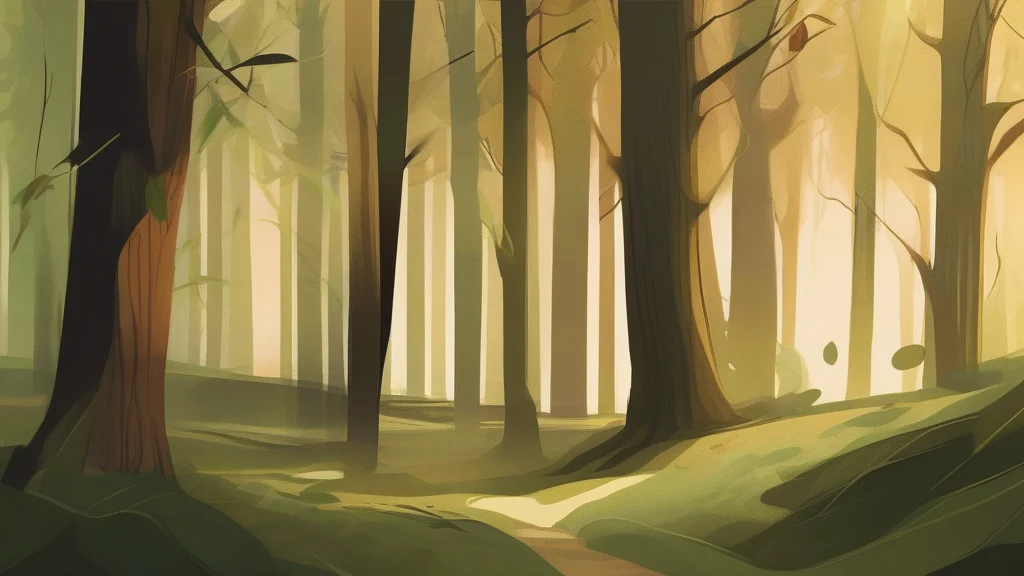
"The path led deep into the greenwood, where sunlight barely reached the forest floor."
"They followed the stream into the greenwood and searched for a sheltered camp."
"The builder left the timber as greenwood so that it would shrink and settle as it dried."
The plural is rare because the common-noun sense is largely literary or archaic.
"The tales evoke the remote greenwoods of the northern countryside."
Greenwood is where green stops being merely a color and becomes a whole landscape.
Reviewed by Deb Chak, Editor. AI-assisted content curated by RJS Tech Solutions LLP.
Where does greenwood come from?
Greenwood combines the Old English elements grēne, meaning “green,” and wudu, meaning “wood,” whose forms developed into modern English green and wood. The compound was established in English by the medieval period and could refer both to leafy woodland and to wood retaining its green color. Its components also have relatives in several other Germanic languages, including forms corresponding to green and wood in Old Norse and Dutch.
How greenwood is actually used
As a common noun, greenwood is literary or archaic and is much less common today than woodland or forest. The capitalized form Greenwood is widely used in surnames and place names, including Greenwood Cemetery in New York City.
Easily confused with greenwood
Lowercase “greenwood” is a common noun for woodland, whereas capital “Greenwood” usually names a place, institution, or person.
As one word, “greenwood” denotes woodland or green wood; as two words, “green wood” more commonly means wood that is green or unseasoned.