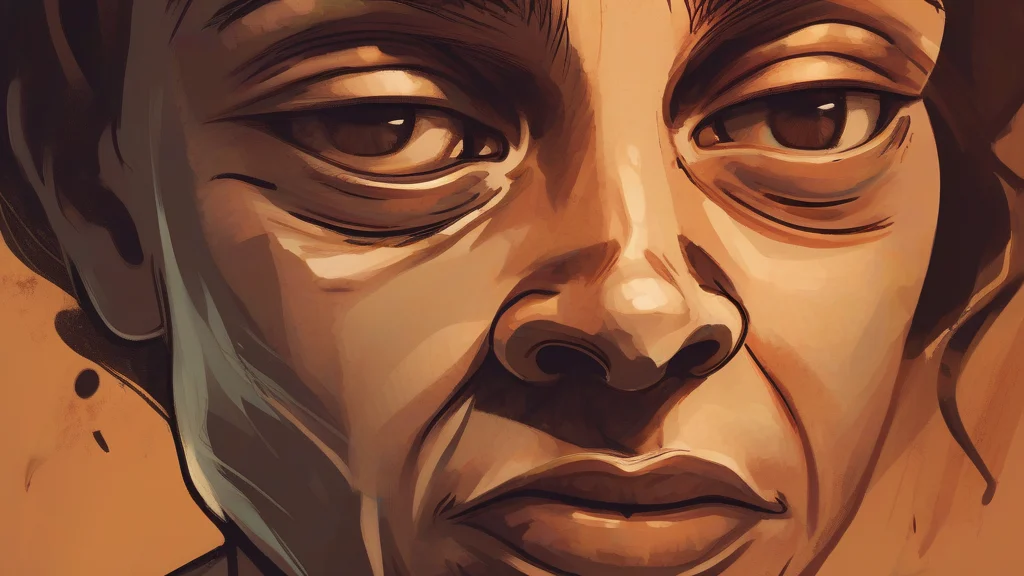
What does grimacing mean?
Grimacing refers to the act of making a facial expression, typically one of disgust, pain, or discomfort. This expression is characterized by a twisted or contorted face, often accompanied by a wincing or scowling motion. Grimacing can be used to convey a range of emotions and is often used in informal contexts to describe reactions to unpleasant or uncomfortable situations. The word can be used as a verb, describing the act of making such a face, or as a present participle, describing the state of making such a face. Understanding grimacing can help in interpreting nonverbal cues in social interactions.
To make a facial expression, typically one of disgust, pain, or discomfort.
"She was grimacing at the unpleasant smell."
Making a facial expression, typically one of disgust, pain, or discomfort.
"He was grimacing in pain as he fell off the bike."
Reviewed by Deb Chak, Editor. AI-assisted content curated by RJS Tech Solutions LLP.
Etymology of grimacing
The term grimacing originates from the verb 'grimace,' which is derived from the Old French 'grimace,' meaning 'a distorted face.' The word has been used in English since the 16th century to describe facial expressions of discomfort or disgust.
How grimacing is actually used
Grimacing can be used to convey a range of emotions, from discomfort to disgust. It is often used in informal contexts.